Should I Repair A Foundation Crack Before Selling In Hamilton?
Short answer: do not repair a foundation crack solely to make it disappear before the condition is understood. Document it, determine whether assessment or monitoring is appropriate, and keep clear repair records. A cosmetic patch without a defined purpose can obscure evidence and create more questions for a buyer.
Decide what problem you are trying to solve
A crack can raise different concerns: water entry, material deterioration, active movement, appearance or uncertainty during due diligence. Each concern calls for different evidence. Ask whether you need a structural opinion, a water-control repair, a designed structural repair, or simply accurate disclosure of a stable documented condition.
A structural engineer should not be asked to guarantee a sale, price or insurer response. The deliverable should address the agreed engineering question and state its limits.
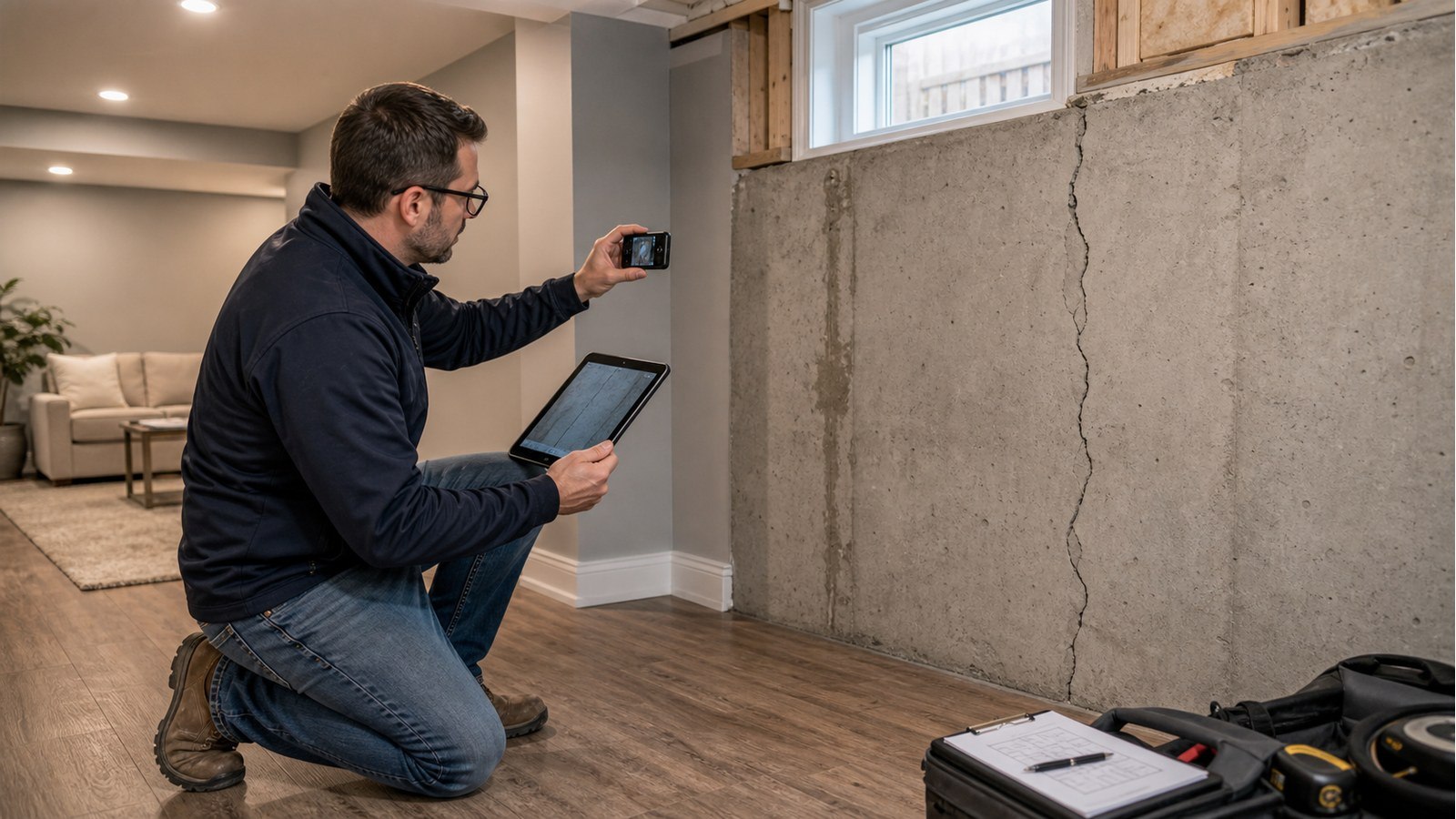
Build the condition record before changing it
- Take dated wide and close photographs with location and scale.
- Note water, weather and when the crack was first observed.
- Gather older listing images, inspection reports and repair invoices.
- Record nearby wall displacement, floor slope or sticking openings.
- Identify previous coatings, injections or drainage work.
Hamilton’s property record search may provide permit or plan history. The City cautions that older records may be incomplete, and the absence of a record does not establish the age or acceptability of a crack.
When assessment before listing can add clarity
Assessment may be useful where the crack is displaced, changing, wet, associated with wall bowing, or part of a pattern that affects floors or masonry. It may also help when a previous repair has no documentation.
A focused report should identify what was observed, accessible areas, available history, limitations and recommended next steps. It should not certify concealed construction or the entire house if only one foundation area was reviewed.
When monitoring may be the honest answer
A single visit may not establish whether movement is continuing. If immediate safety or deterioration does not demand repair, a defined monitoring program can provide evidence over time. It should specify reference points, measurement method and what result triggers re-evaluation.
Monitoring started days before listing rarely creates a meaningful history. If timing is short, the report should state that limitation rather than implying stability from one observation.
Repair records a buyer can understand
Keep assessment reports, drawings, permits, contractor scope, product information, inspection records and photos taken before concealment. Distinguish a water-sealing repair from structural strengthening. A transferable warranty, if offered by a contractor, should be read for its actual terms.
If repair alters the foundation structurally, check Hamilton’s current permit requirements. Permit issuance or inspection does not create a general warranty or replace disclosure advice.
Disclosure and transaction advice come from other professionals
Questions about seller disclosure, representations in a listing, contract terms and liability are legal or real-estate matters. Provide your lawyer and representative with accurate technical records. Do not ask the engineer to draft legal disclosure language unless that is within an appropriate separate scope.
Likewise, a buyer’s home inspector and a structural engineer serve different roles. A home inspection may flag a concern; a focused structural assessment investigates the defined issue. Neither should claim knowledge beyond accessible conditions and contracted scope.
Three listing strategies and their trade-offs
Patch without assessment
This may improve appearance but can obscure evidence and leave cause unresolved. It provides the least technical clarity.
Assess and disclose without immediate repair
This may be reasonable where findings support monitoring or no structural repair, but the report’s limitations and any water issue remain relevant.
Complete a documented repair
This can provide the clearest record when repair is warranted, provided design, permits and construction evidence are retained. It does not guarantee a buyer’s or insurer’s conclusion.
Professional and regulatory context
PEO’s condition assessment guideline explains useful practice concepts such as defined objectives and limitations, though PEO warns older guidelines may be outdated. Current legal and technical requirements must come from current sources and professional judgment.
If engineering services are offered, verify current licence and firm information through the PEO directory. Listing confirms status information, not an endorsement.
Hamilton services before a sale
Foundation inspections fits a defined crack concern. If symptoms extend into framing or floors, structural inspections may be more appropriate. Where findings require a documented repair, structural drawings can support permit and construction.
Transaction-focused foundation reading
- Do Foundation Cracks Affect Home Insurance In Hamilton?
- Can A Structural Engineer Write A Foundation Crack Report In Hamilton?
- How Do Structural Engineers Monitor Foundation Movement In Hamilton?
Pre-sale crack FAQs
Will an engineer say the crack is “nothing”?
A responsible report describes evidence, significance within scope and limitations. Absolute language may be unsupported where construction is concealed or history is short.
Should I obtain quotes before the assessment?
You can gather options, but permanent repair pricing is more comparable after the objective and scope are defined.
Can I paint over an old patch?
Document it first. New finishes can make the repair and any reopening harder to evaluate during due diligence.
Does a sealed report transfer responsibility to the engineer?
The engineer assumes responsibility for the engineering content within the report’s scope. The seal is not a transaction guarantee, warranty or certification of inaccessible conditions.
Need a foundation concern documented before listing? Request a quote with history, photos and prior repair records.