How Do Structural Engineers Monitor Foundation Movement In Hamilton?
Short answer: engineers monitor foundation movement by defining the question, selecting stable reference points, recording repeatable measurements and comparing them over an appropriate period. The method can involve crack gauges, level surveys, displacement measurements or other instruments. Data is useful only when its accuracy and response thresholds are understood.
Monitoring begins with a decision, not a device
Ask what the data must decide: Is a crack changing? Is a wall continuing to bow? Are floor elevations stable during nearby work? Does a repaired area remain within an expected condition? Different questions require different references and accuracy.
Installing a gauge without a baseline, schedule or reviewer can create false confidence. A complete plan says who measures, how results are recorded and what change triggers action.
Establish a defensible baseline
Document the building and environmental condition at the start: crack geometry, wall or floor locations, water, recent construction and date. Use photographs tied to a plan. Record instrument type and reference points so another competent person can repeat the reading.
A benchmark must itself be stable enough for the question. Comparing one moving part of a building with another can hide change. Where high accuracy matters, a qualified survey or specialist monitoring system may be appropriate.
Common monitoring approaches
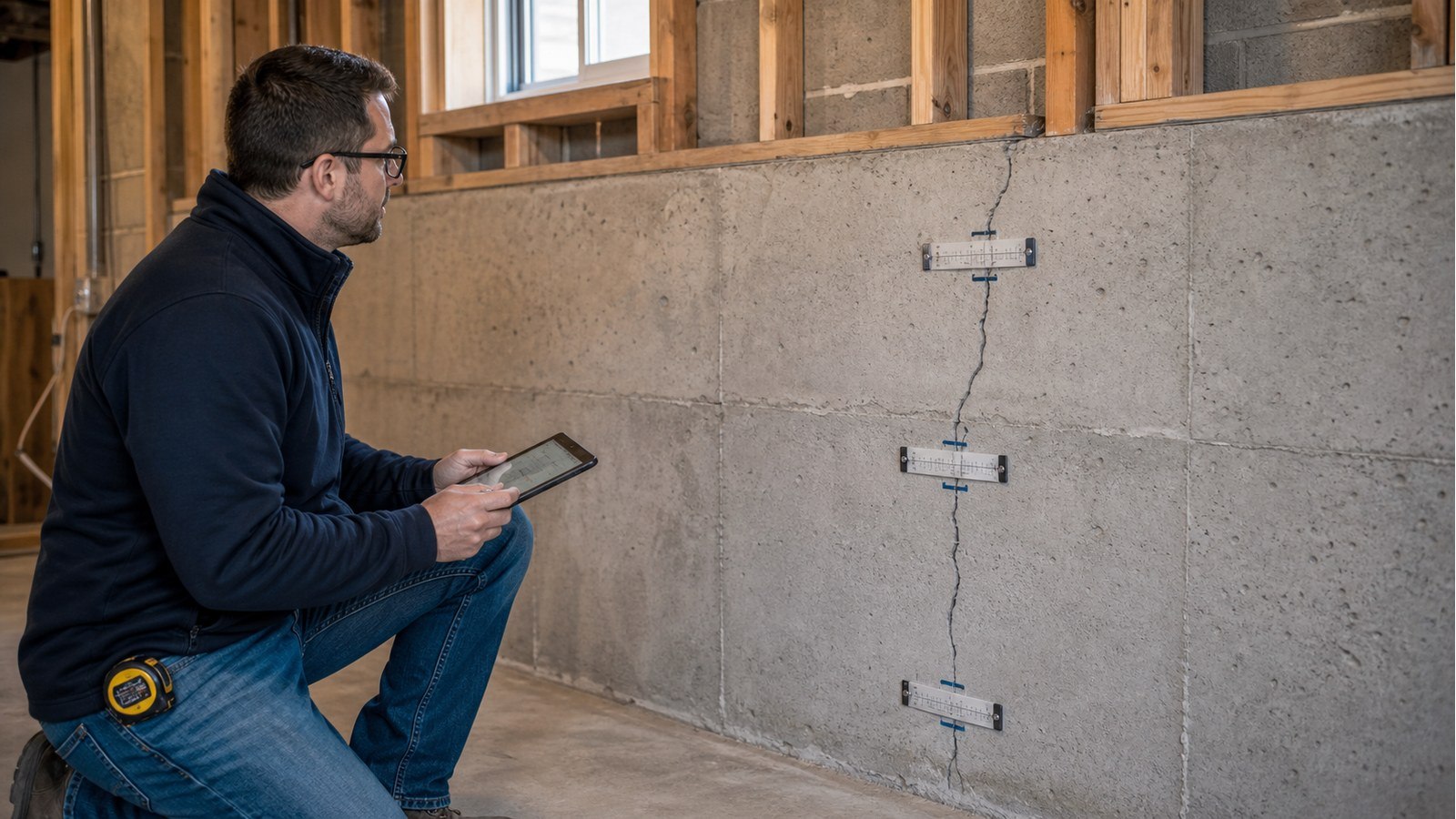
Crack-width or displacement gauges
These can track relative movement across selected cracks. Installation, reading direction, temperature effects and physical disturbance must be considered. A broken gauge is not automatically proof of structural movement.
Level or elevation surveys
Repeat floor or foundation elevations can identify patterns when tied to suitable references. Surface finishes, instrument setup and access affect repeatability.
Wall-plumb or bowing measurements
Measurements at fixed stations can track geometry. The reference line, endpoints and wall locations should remain consistent.
Photographic records
Photos help show appearance and context but are weak quantitative data unless position, scale and lighting are controlled. They should complement, not replace, measurements.
How often should readings be taken?
There is no universal schedule. Frequency depends on the suspected mechanism, observed rate, construction activity and consequence of change. Monitoring during underpinning may require a different cadence from a long-standing dry crack.
Seasonal cycles can matter. A short period may capture weather-related variation but not a long-term trend. The plan should explain its duration and avoid claiming permanence from limited observations.
Set response triggers before data arrives
Triggers can include a defined measured change, acceleration, new companion symptoms, loss of instrument reliability or a construction event. The appropriate threshold must reflect method accuracy and project risk; this article does not provide a generic number.
The response may be increased frequency, site review, temporary precautions, work stoppage or repair design. Assign contact and decision responsibilities in advance, particularly during active excavation or foundation work.
Things that can corrupt a movement record
- Moving or replacing the benchmark without documentation.
- Reading a gauge in different directions.
- Painting, patching or finishing over the instrument.
- Changing measurement tools or units mid-program.
- Ignoring temperature, moisture or construction context.
- Missing readings and filling them in from memory.
- Reporting only values that support a preferred conclusion.
Monitoring during nearby construction
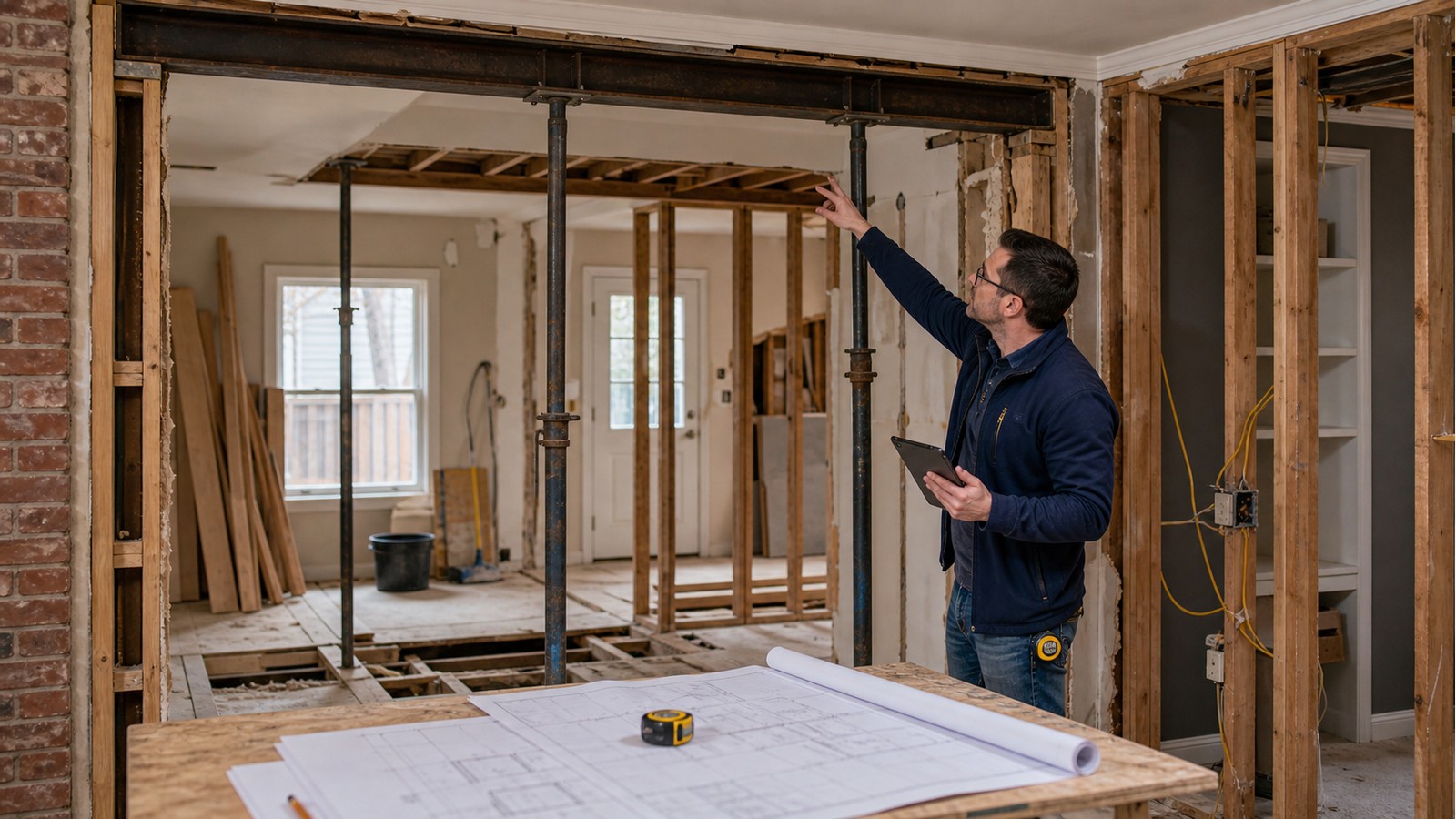
Underpinning, excavation or heavy renovation can justify monitoring of the subject building and relevant neighbouring conditions. The program should align with construction stages so readings can be interpreted against excavation, concrete placement, load transfer and water events.
A condition survey documents the starting state; it is not the same as active monitoring. Legal access and communication with neighbours require separate agreements and advice.
Professional-practice sources
PEO’s older condition assessment guideline provides useful concepts about defined objectives and methodical investigation, but PEO warns that older guidelines may be outdated. Monitoring methods must follow current professional judgment and project needs.
Where monitoring supports permitted foundation work, consult Hamilton’s permit requirements and coordinate required municipal inspections. Monitoring does not replace permit inspection or engineering review.
For engineering services, current practitioner and firm status can be checked through the PEO directory. Directory listing is not an endorsement of a particular monitoring method.
Example: one crack, two different monitoring goals
For a long-standing crack with no other symptoms, the goal may be to establish whether it changes over seasons. During adjacent underpinning, the goal may be rapid detection of construction-related movement. The first can tolerate a longer interval; the second may require closely timed readings and predetermined stop-work communication.
Hamilton services for movement tracking
Foundation inspections establishes the initial foundation concern. Structural inspections fits movement that involves floors, walls or framing beyond the foundation. If monitoring supports a designed repair, structural drawings can document the permanent work separately.
Monitoring companion articles
- Can A Structural Engineer Write A Foundation Crack Report In Hamilton?
- Can Underpinning Damage My Neighbour's House In Hamilton?
- When Does A Foundation Crack Need Repair In Hamilton?
Foundation monitoring FAQs
Can I monitor a crack myself?
You can document observations, but professional input may be needed to choose stable references, accuracy and response triggers. DIY records should not be overinterpreted.
Does no measured change mean the foundation is safe?
It means no change above the method’s detectable range during that period. Other deficiencies or longer-term movement may remain outside that conclusion.
Can monitoring replace a repair?
Only when the assessment supports monitoring as the appropriate response. It should not delay necessary action for an unstable or deteriorating condition.
Who owns the monitoring data?
Address access, reporting and use in the service agreement. For multi-party construction, define who receives alerts and complete records.
Need a movement question defined? Request a quote with the observed condition, history and decision the monitoring must support.