Can A Structural Engineer Write A Foundation Crack Report In Hamilton?
Short answer: yes. A structural engineer can prepare a foundation crack report when the objective, access and evidence support professional findings. A useful report identifies what was inspected, observations, reasoning, limitations and recommended next steps. It should not certify concealed construction or promise an outcome controlled by the City, an insurer or a buyer.
Define the decision the report must support
“I need a crack letter” is not yet a scope. Explain whether the report is for repair planning, a property transaction, an insurer’s technical question, monitoring, or permit documentation. The same crack may require different investigation depending on the decision.
Provide any questions from the intended reader before the site visit. The engineer can say which questions are technical and answerable, which require more access, and which belong to another professional.
Minimum evidence for a focused assessment
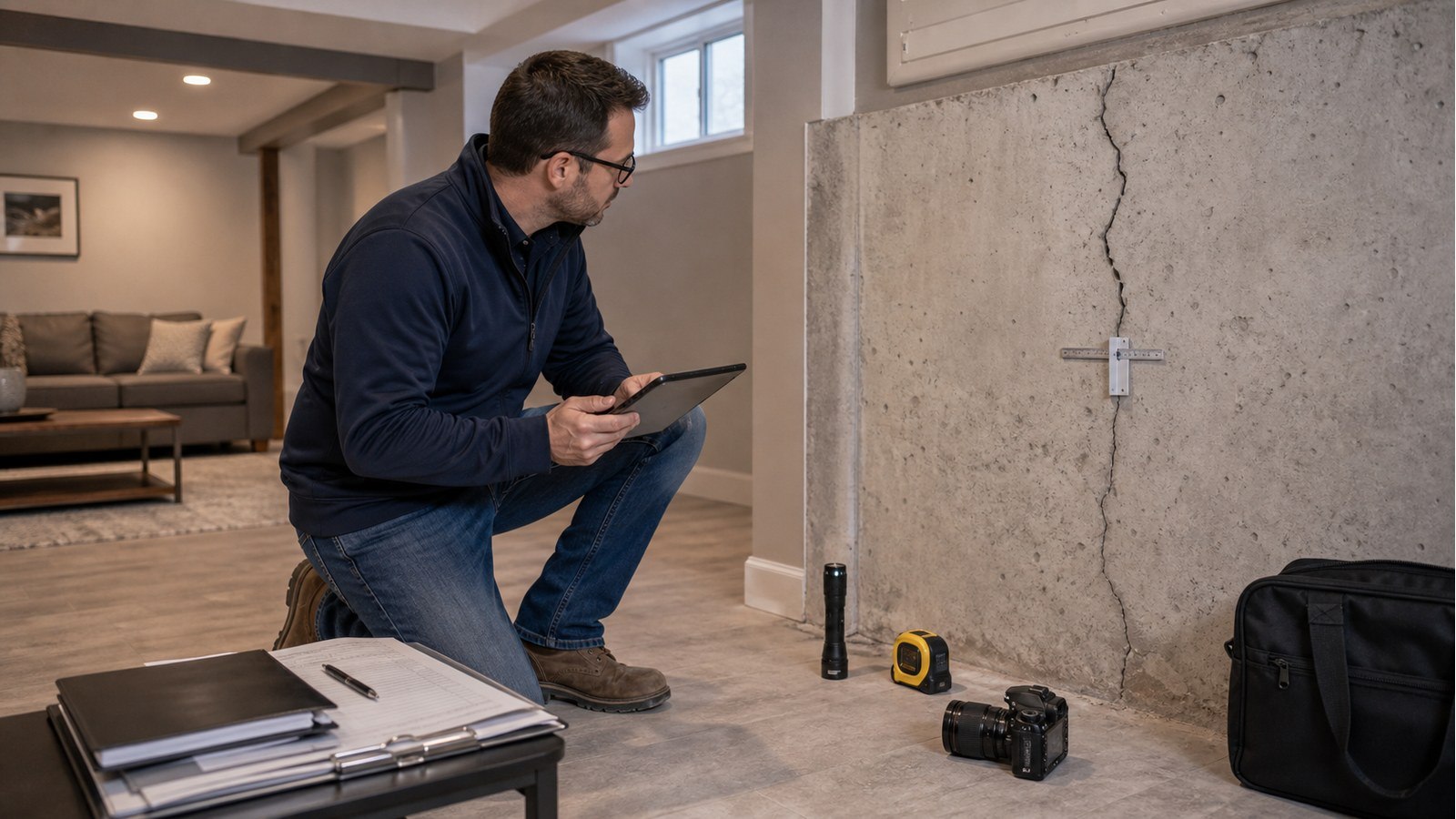
- Location and extent of the crack.
- Wall material, accessible geometry and displacement.
- Related water, deterioration or movement symptoms.
- Interior and exterior context.
- Known history and previous repairs.
- Relevant drawings, permits, photos or reports.
Access limits should be recorded. If finished walls conceal the foundation, the report might recommend targeted exposure rather than draw a firm conclusion from drywall cracking.
What belongs in the written deliverable
The report should identify the property and inspected area, client objective, date, available documents and methods. Observations should be distinguishable from information supplied by others. Conclusions should explain the evidence and uncertainty.
Recommendations may include no immediate structural work, monitoring, water-control investigation, additional exposure, geotechnical input or repair design. If repair drawings are not included, say so plainly.
Assessment is not automatically repair design
A condition report describes and evaluates the existing concern within scope. Repair design specifies materials, dimensions, reinforcement, connections and construction details. Combining both may be efficient where the cause and condition are established, but it should be contracted explicitly.
Likewise, a report that recommends monitoring does not include months of readings unless that service is defined. The monitoring method, references, frequency and review triggers require their own plan.
Understand the meaning of the seal
Ontario Regulation 941 addresses signing, dating and sealing engineering documents. The seal indicates professional responsibility for the engineering content within stated limits; it is not a permit, warranty or certification of inaccessible work. See the current Regulation 941.
Verify individual and firm authorization through the PEO directory where relevant. Directory status is not a quality endorsement, and a licence does not expand the report beyond its written scope.
Practice guidance and its boundary
PEO’s older structural condition assessment guideline discusses defined objectives, methodical investigation and clear findings. PEO’s live guideline index warns that some guideline content may be outdated, so mandatory statements must rely on current statutes, regulations, codes and professional judgment.
For homeowners, the practical lesson is simple: expect a report to explain how it reached its conclusion and what it could not verify.
Reports for permits, sales and insurance
Permit use
Hamilton may require drawings or additional information for a structural repair. Check the current City permit requirements. A report alone may not provide buildable repair details.
Property transaction
The report can document a focused structural concern. It should not provide legal disclosure advice, a property valuation or a guarantee of future performance.
Insurance use
The engineer can address technical condition and cause only to the extent supported by evidence. Coverage remains an insurer and policy question.
How to prepare for the site visit
- Send the objective and intended reader.
- Share dated photos and a crack-location sketch.
- Collect old reports, repairs, drawings and permit records.
- Provide safe access to the affected wall and relevant exterior.
- Do not patch, paint or demolish unless immediate safety demands it.
- List known water, seasonal and movement history.
Example limitation: one visit cannot prove a trend
An engineer can measure the crack and record current geometry. Without reliable earlier data, one visit may not establish whether movement is active. The report should say so and may recommend monitoring rather than label the wall permanently stable.
Hamilton services for crack documentation
Foundation inspections is the primary assessment service. Where the concern forms part of broader building movement, structural inspections may fit better. If findings call for permit-ready repair information, structural drawings is a separate follow-on scope.
Choose the right evidence path
- How Do Structural Engineers Monitor Foundation Movement In Hamilton?
- Should I Repair A Foundation Crack Before Selling In Hamilton?
- Do Foundation Cracks Affect Home Insurance In Hamilton?
Foundation report FAQs
Can the report cover the whole house?
Only if a whole-building assessment is explicitly scoped and supported by access. A crack report should not imply that uninspected systems were certified.
Can an engineer report on photos only?
Photos may support triage or limited advice, but a formal conclusion may require site measurements, context and access. The deliverable should disclose the basis.
Will the report include a repair price?
Not typically unless cost advice is separately included and qualified. Contractors price construction from a defined scope; market conditions change.
Can I reuse the report years later?
It records conditions and information at its date. Later movement, water or alterations can make a new assessment necessary.
Need a crack report with a clear scope? Request a quote with the decision you need to make and available evidence.