Do I Need A Structural Engineer After A Fire In My House In Hamilton?
A structural engineer should assess a Hamilton house after a fire when heat, flame, firefighting, collapse, or emergency openings may have affected load-bearing walls, floors, roofs, foundations, masonry, steel, concrete, or connections. Do not enter until emergency authorities permit access, and do not begin permanent demolition before stability and evidence are considered.
Fire scenes remain hazardous after flames are out
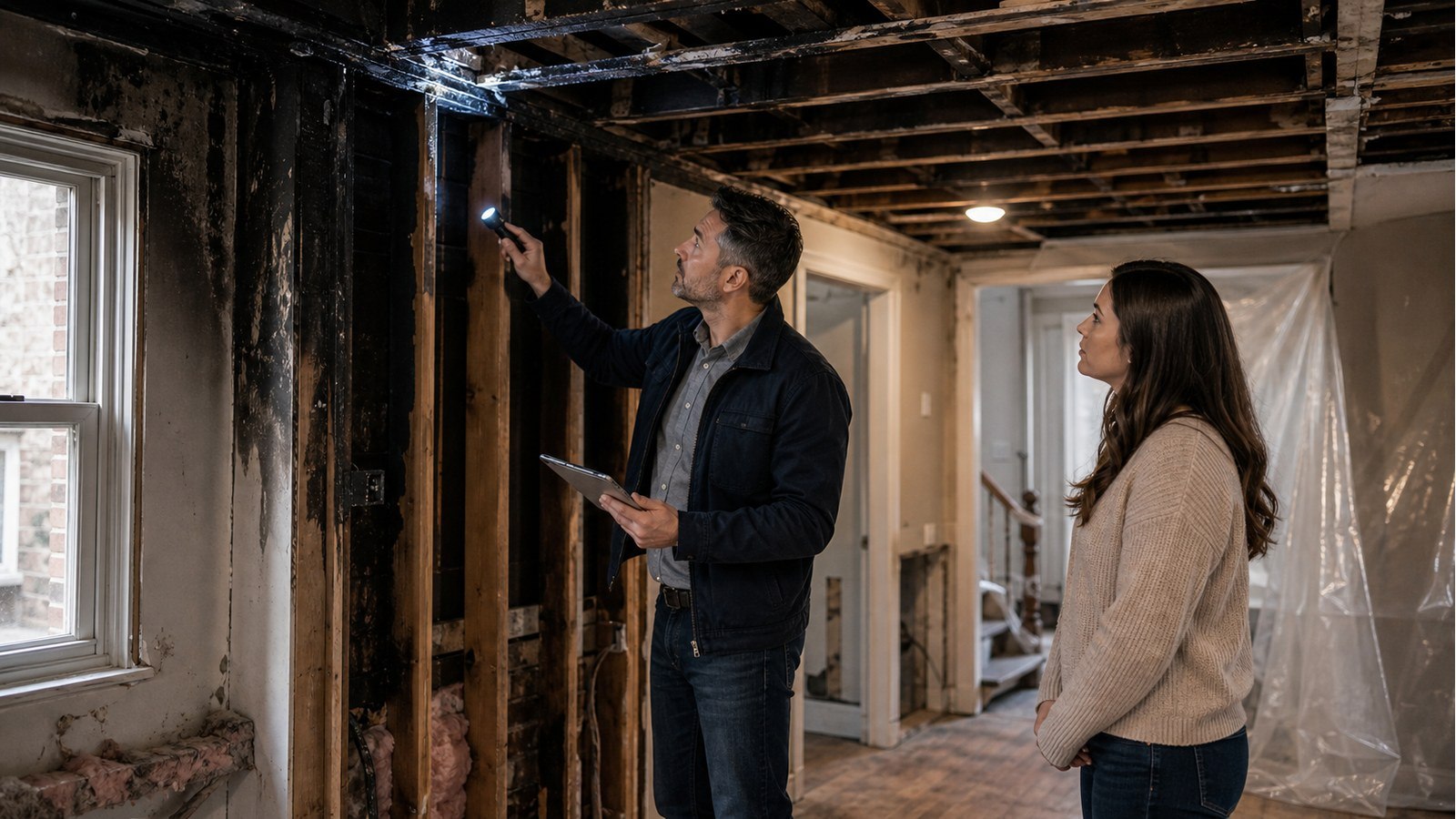
Roof and floor members may be weakened, connections may have failed, masonry can be loose, and water can add load or create electrical and contamination hazards. Areas that appear intact from outside may have concealed damage. Follow fire-service, building-authority, utility, and restoration safety direction.
Temporary shoring, bracing, fencing, weather protection, and access restrictions may be necessary. These measures should not bear on damaged floors or foundations without review.
Damage extends beyond blackened surfaces
Wood loses section through charring and can be affected by heat, connections, and prolonged water exposure. Steel can deform or lose properties under high temperatures even after cooling. Concrete may crack or spall; reinforcing can be affected. Masonry units, mortar, anchors, and lintels may deteriorate or move.
Soot colour and visible char alone do not establish temperature history or remaining capacity. The engineer may use measurement, exposure, material testing, and fire-scene information to define repair or replacement.
Follow the load path around the burned area
A damaged rafter may transfer load to ceiling framing; a failed joist can affect walls and beams; a burned stud wall can reduce vertical and lateral support. Openings cut for firefighting and debris removal may also interrupt bracing or framing.
A post-fire structural assessment examines accessible components and identifies areas requiring stabilization, further exposure, or testing. It should distinguish direct fire effects from pre-existing deterioration and later demolition.
Preserve evidence before broad demolition
Life safety and authorized emergency work take priority. Once safe, photograph rooms, elevations, structural components, connections, collapse paths, water lines, and temporary work. Gather pre-fire plans, renovation photos, permits, and insurance records.
Coordinate destructive investigation with the insurer and other authorized parties. Removing all damaged material before engineering review can make cause, extent, and repair boundaries harder to establish. Keep representative removed pieces where appropriate and safe.
Testing should answer a decision
Material testing is useful when visual evidence cannot establish whether a component can remain. The program may focus on steel deformation or properties, concrete soundness, masonry, fasteners, or wood section and condition. Testing every component is not automatically necessary.
The engineer and testing specialist should define sample locations, methods, interpretation, and how results affect the repair design. One favourable sample should not be generalized across differently exposed areas without justification.
Stabilization, demolition, and repair are three scopes
Stabilization protects people and remaining structure. Selective demolition removes unsafe or obstructing material using a sequence that preserves support. Repair design restores the intended load path and interfaces with retained construction. Combining them into one vague instruction can leave dangerous gaps.
Post-fire structural drawings may show shoring, removal limits, replacement framing, reinforcement, connections, and review hold points. Structural renovation engineering may also address owner-requested layout changes, but insurance restoration and elective upgrades should be documented separately.
Water and weather exposure continue after the fire
Firefighting water can saturate wood and insulation, corrode hardware, and reach lower levels. A damaged roof can admit rain or snow. Temporary covers must not overload unstable framing or trap water.
Environmental remediation, drying, electrical, mechanical, and envelope professionals should coordinate with structural work. The engineer does not determine contamination clearance unless separately qualified and retained.
Hamilton controls unsafe-building and permit steps
Hamilton’s building inspection page provides a route to report potentially unsafe buildings. Emergency authorities or the City may restrict entry or occupancy. Follow written directions and do not remove posted notices.
Permanent structural repairs, replacement, demolition, and material alterations may require permits under the City’s permit guidance. Permit-response support can coordinate structural submissions and revisions, but does not replace fire, insurance, environmental, or other approvals.
A post-fire engineering file should contain
- fire-service and municipal orders or reports available to the owner;
- event timeline and areas of known fire involvement;
- pre-fire drawings, permits, and renovation records;
- photos before and after emergency demolition;
- temporary shoring and weather-protection records;
- material testing and specialist reports;
- insurance adjuster questions and authorized scope;
- restoration plans and proposed owner upgrades;
- access restrictions and hazardous-material information;
- construction review and municipal inspection records.
Related Hamilton damage and insurance guides
- Engineering support for an insurance claim
- Structural review after flood or leak
- Structural review after vehicle impact
Post-fire engineering FAQs
Can the restoration contractor decide which framing stays?
Contractor experience is important, but a structural professional should establish retention and repair where load-carrying capacity is uncertain.
Does all charred wood need replacement?
Not automatically. Remaining section, heat effects, connections, loads, code and permit requirements, and repair practicality inform the decision.
Can the house be inspected before power is restored?
Possibly, using safe lighting and access arrangements, but only after emergency authorities permit entry and hazards are controlled.
Will the engineer decide whether insurance pays for upgrades?
No. Engineering can separate restoration requirements and owner changes technically; policy coverage and payment are decided by the claim parties.
After emergency access is authorized, request a structural engineering quote with fire-service or City documents, damage photos, pre-fire plans, insurer contacts, and stabilization details.