Do I Need An Engineer After A Car Hits My House Or Garage In Hamilton?
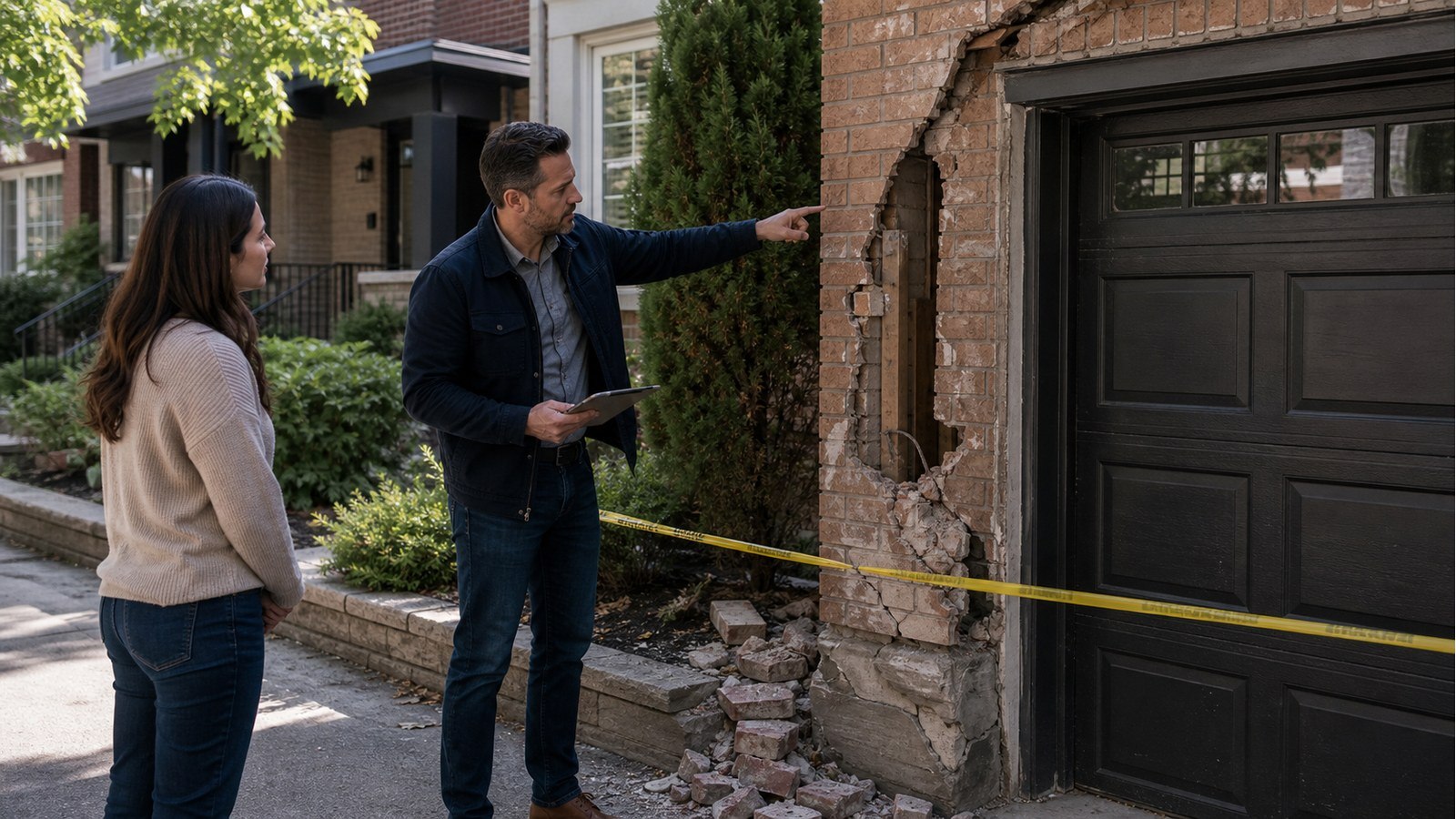
Hire a structural engineer after a vehicle strikes a Hamilton house or garage when the impact affects walls, columns, foundations, beams, door openings, roof support, masonry, or building stability. Keep people away from the damaged area, contact emergency services when required, and do not let cleanup or towing disturb critical evidence before the structure is stabilized.
Treat safety and utilities as the first decision
A vehicle can sever gas, electrical, plumbing, or fire-protection services and destabilize walls or roofs. If there is fire, gas odour, sparking, major movement, falling material, or unsafe occupancy, leave the area and call the appropriate emergency authority. Do not enter to take photos.
Temporary barriers may be needed around sidewalks, driveways, or adjacent rooms. A garage door or wall that remains standing can still be poorly supported after studs, masonry, anchors, or columns are displaced.
The visible opening may not show the full load path
Impact can push a wall off its foundation, split framing, fracture masonry, deform steel, loosen anchors, damage sheathing, and transfer force into intersecting walls or roof framing. Finishes can spring back while connections remain compromised.
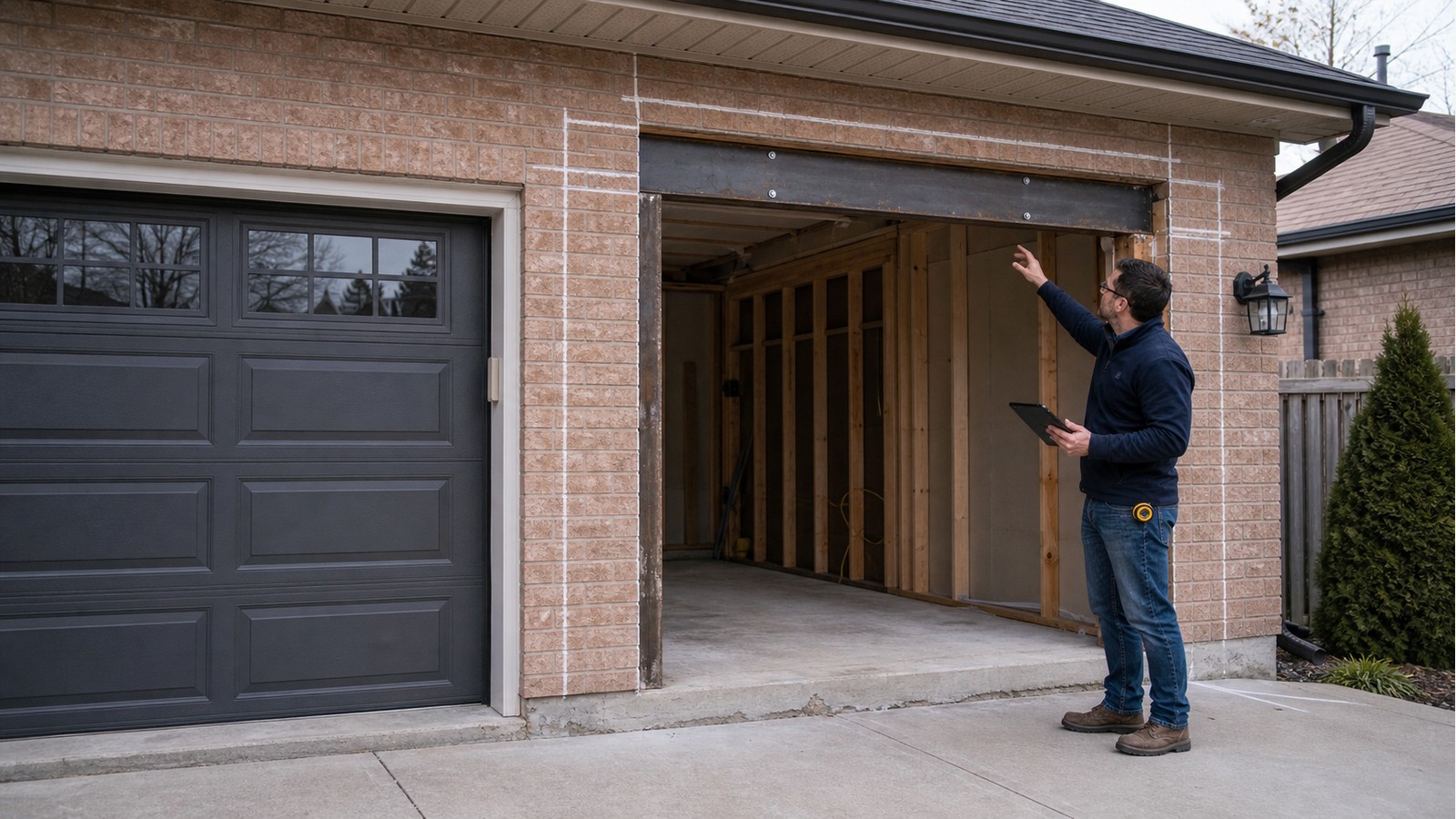
Inspectors should look above, below, and beside the impact. In a garage, narrow wall segments around a wide overhead door may be important for lateral resistance. In a house, the struck wall may support upper floors or a roof. Cracks at corners, separated trim, roof movement, and doors that no longer operate can mark transferred force.
Do not remove the vehicle until support is considered
The vehicle may be entangled with the building or, unintentionally, providing some support. Towing can pull on damaged framing and trigger collapse. Emergency responders, the engineer, restoration contractor, and tow operator should coordinate removal where the structure is unstable.
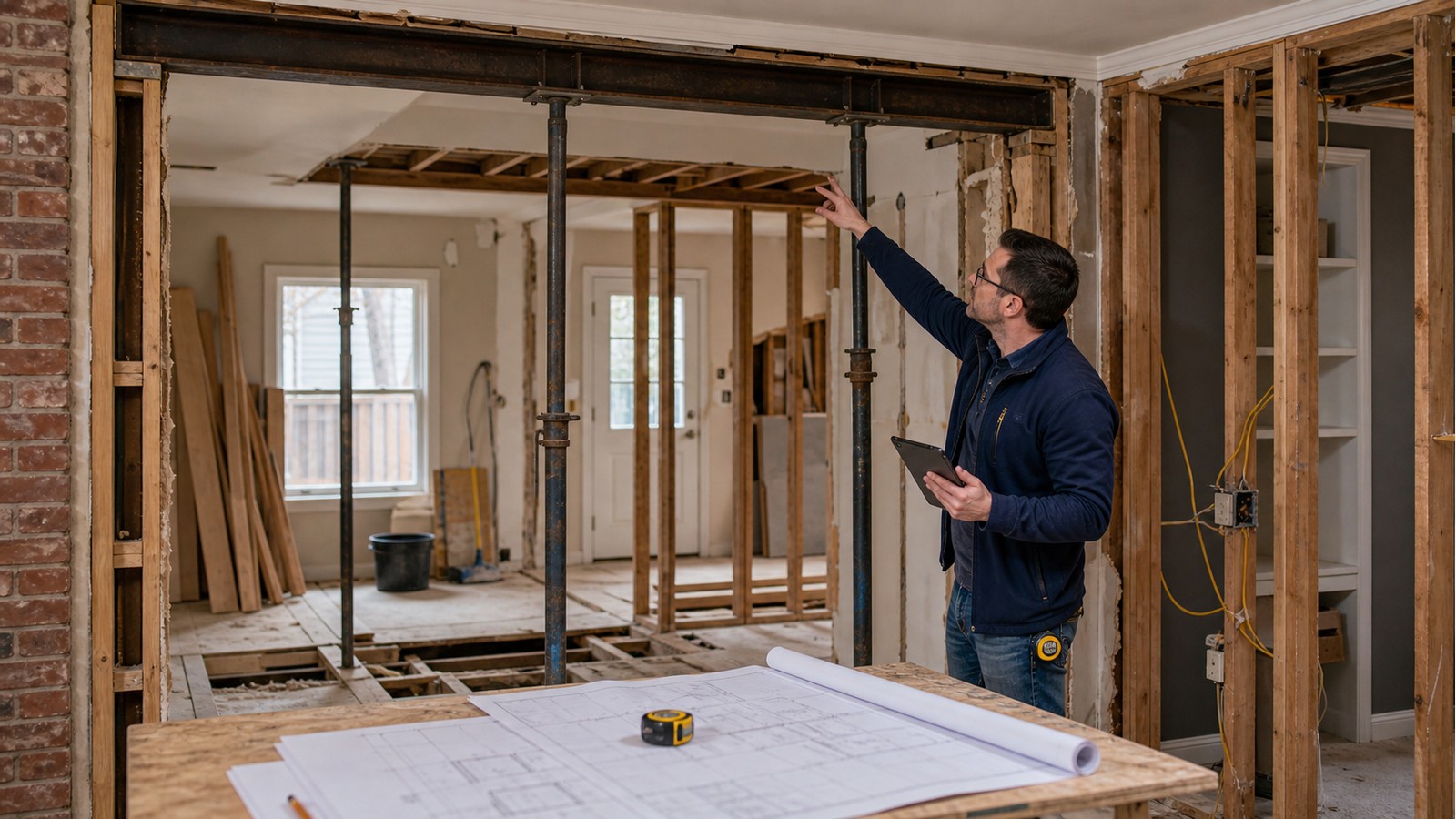
Temporary shoring needs suitable bearing and a safe installation sequence. A prop resting on an ordinary slab or damaged framing may not provide reliable support.
After removal, compare the building position and crack pattern with pre-removal photographs. New movement can change the stabilization plan, access restrictions, and investigation limits.
Do not reopen an overhead door or restore vehicle access until the damaged wall, lintel, and lateral support have been assessed.
Preserve evidence for technical and insurance review
After the area is safe, take wide and close photographs before moving debris. Record the vehicle path, impact location, displaced components, tire marks, fallen materials, temporary stabilization, and surrounding undamaged structure. Preserve removed pieces and product labels when authorized.
An impact assessment can support the insurance claim, but coverage and liability are not engineering conclusions. Provide the adjuster’s technical question and any pre-loss drawings or photos.
The investigation may need openings and measurement
Drywall, siding, brick, insulation, and garage finishes can hide cracked framing and connections. The engineer may request controlled removal after initial stabilization. Measurements of wall displacement, slab or foundation cracking, beam alignment, and roof geometry help define the damage.
Where masonry or concrete is struck, material testing may be considered. Where a foundation moved, soil and underground services may require review. The investigation should expand only as evidence justifies.
Repair is not simply filling the hole
Repair drawings may show shoring, demolition limits, member replacement, wall anchorage, foundation repair, masonry support, sheathing, connections, and sequencing. The design should connect new work to sound retained structure.
Replacement materials can be stronger yet incompatible with retained construction if stiffness, movement, or connection details are ignored. The engineer should define inspection hold points before finishes conceal repairs.
Hamilton may require permits and unsafe-building coordination
The City’s building inspection page provides contacts for notices of potentially unsafe buildings and construction complaints. Emergency authorities or the City may restrict occupancy until safety work is complete.
Hamilton’s permit guidance lists structural repairs, replacement structures, and material alterations among work needing review. Emergency stabilization does not automatically authorize permanent reconstruction. Permit support can coordinate structural documents and comments.
Document the repair from start to finish
- Emergency response and access restriction.
- Initial condition photographs and event records.
- Temporary stabilization and coordinated vehicle removal.
- Selective demolition to expose damage.
- Revised engineering scope based on findings.
- Permit submission and approval where required.
- Repair with structural and municipal reviews at hold points.
- Close-out documents and retained records for insurer and owner.
Related Hamilton damage articles
- How engineering supports an insurance claim
- Engineering after flood or major leak
- Structural review after fire
Vehicle-impact FAQs
Can a restoration contractor decide the building is safe?
Contractors provide emergency and repair expertise, but a qualified structural professional should assess damaged load-carrying construction when stability or capacity is in question.
Can the car be removed for insurance photos?
Only after safety and structural effects are considered. Movement can disturb evidence and destabilize the building.
Does minor exterior damage rule out hidden problems?
No. Force can travel through connections and finishes can conceal fractures. The required investigation depends on the impact location and building system.
Can the damaged wall be rebuilt exactly as before?
Only if the repair design establishes that approach and current permit requirements are met. The surrounding support and connections may also need restoration.
After the area is made safe, request a structural engineering quote with impact photos, emergency-response details, building plans, insurer contact, and known utility damage.