What Causes Cracks Above Doors And Windows In Hamilton Homes?
Short answer: cracks above doors and windows can result from normal finish movement, inadequate or changing header support, lintel corrosion, framing shrinkage, foundation movement or earlier alterations. The shape is a clue, not a diagnosis. Check whether the opening changed, whether masonry is involved, and whether related movement appears elsewhere.
Start by identifying the material that cracked
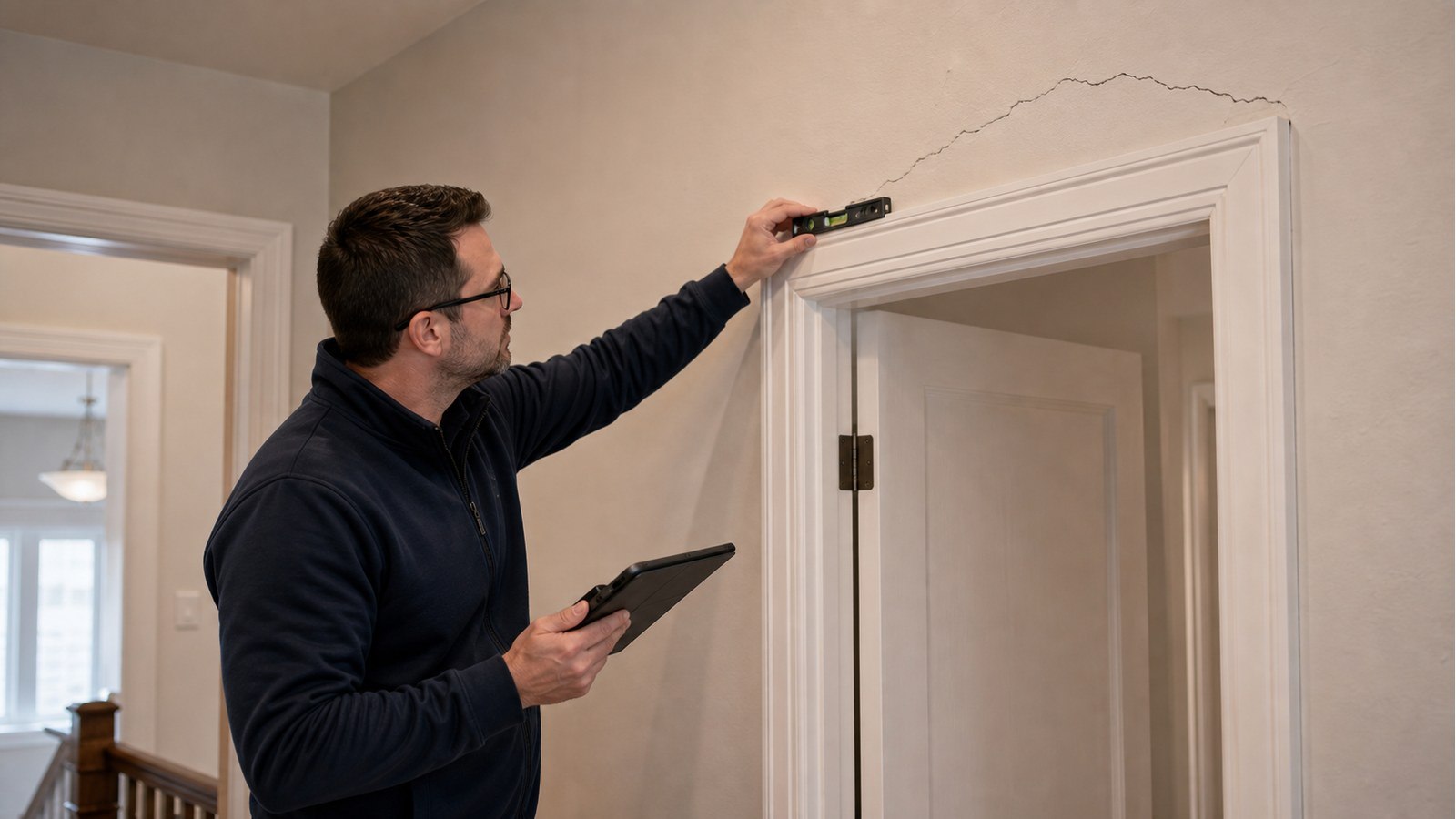
A hairline in drywall joint compound is different from a crack through plaster, masonry or the structural wall. Record whether it follows a board joint, runs diagonally from a corner, crosses trim or continues outside. Repairs should suit the actual substrate.
Fresh paint can hide extent and history. Use older photos where available, and note whether the crack returns after seasonal changes or earlier patching.
How openings concentrate movement
Door and window corners interrupt otherwise continuous walls. Small framing or finish movements often concentrate there. That is why diagonal cracks can appear without proving major structural failure.
However, openings also need headers or lintels to carry load above. If support deflects, corrodes, loses bearing or was changed during renovation, cracking may reflect a structural or masonry issue.
Compare five nearby observations
- Does the door or window stick, rack or show changing gaps?
- Is the header, lintel or framing visible anywhere?
- Does exterior brick crack at the same opening?
- Are floors sloping or walls cracked on the level below?
- Was the opening enlarged, replaced or altered recently?
A single finish crack with a normally operating opening may need a different response from coordinated interior and exterior displacement.
Wood framing versus masonry clues
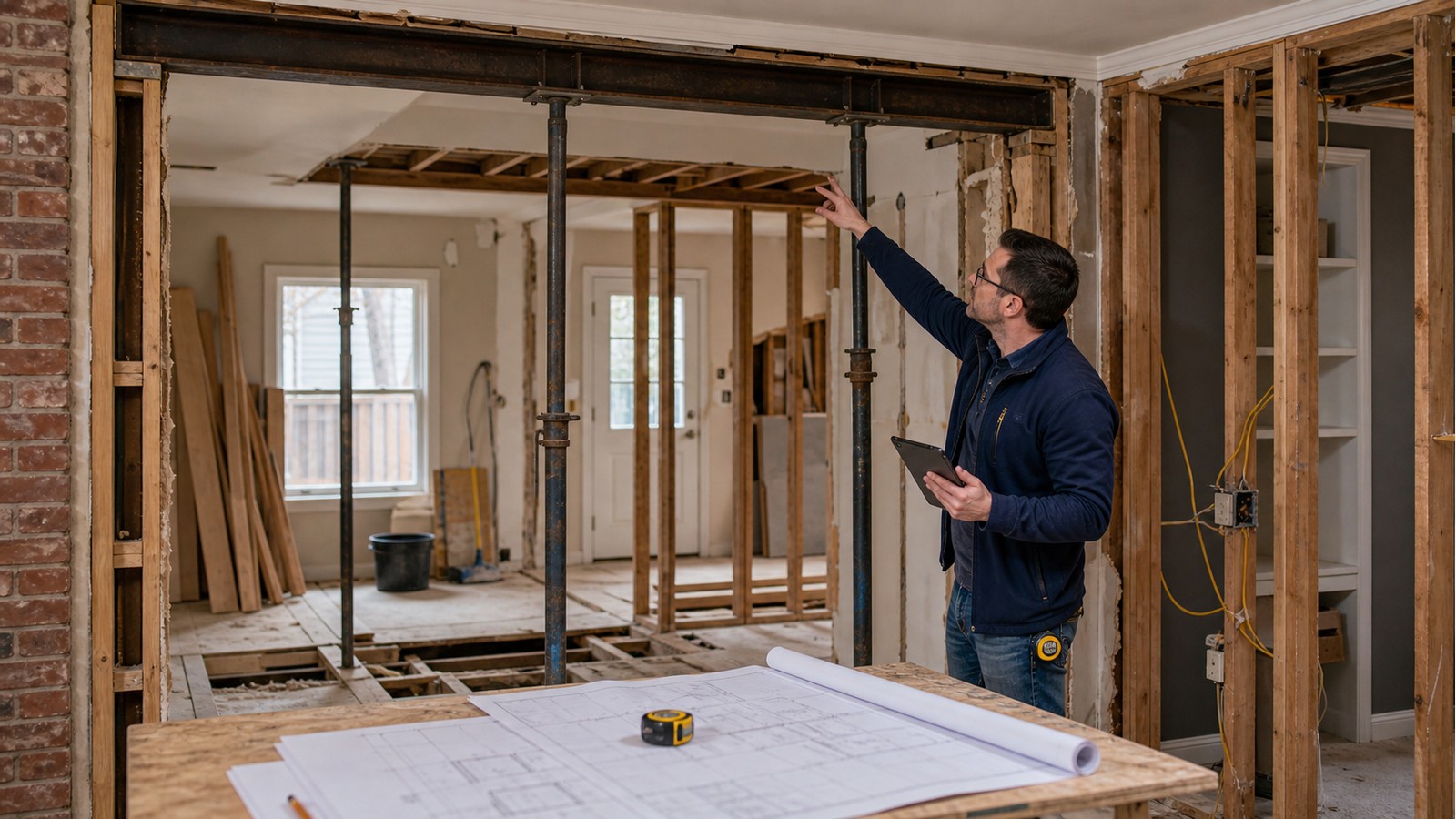
In wood framing, review header support, jack studs, connections, shrinkage and nearby service cuts. Above wide openings, deflection or a concentrated load can affect finishes. Do not assume the header size from the trim.
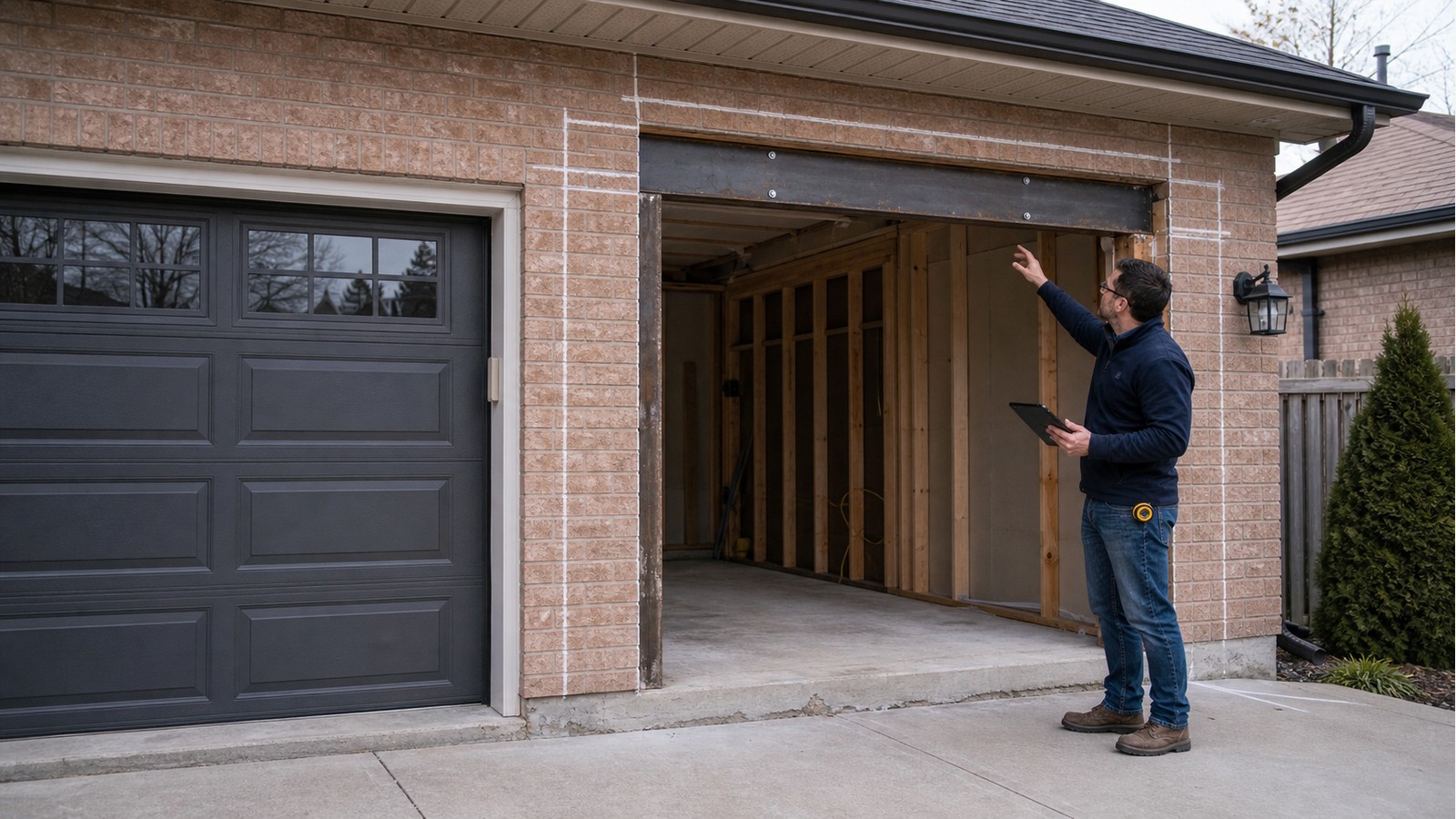
In brick veneer, inspect the steel lintel, bearing, rust staining, bulging and mortar cracking. Structural masonry requires another load-path review. A mason can assess material repair, while structural input may be needed for support or movement.
A lintel problem leaves a different trail
Above a masonry opening, a lintel carries brick or stone across the gap. Corrosion, inadequate bearing or movement at its supports can produce cracking that follows mortar joints near the opening. Rust staining, displaced masonry and a visibly distorted line above the window are useful observations to record.
Replacing mortar alone does not restore a deficient support. Conversely, a diagonal drywall crack inside does not prove the exterior lintel has failed. Compare both faces of the wall, the opening operation and the condition of sealants and flashing before deciding which trade or design response is appropriate.
When foundation movement enters the picture
If cracks repeat through several levels, align with foundation cracking, or accompany floor slope and sticking doors, broaden the assessment. The opening may be where building movement becomes visible rather than where it begins.
Document the entire vertical line through the house. A localized patch at the window will not address a moving foundation or altered support below.
A repair sequence that preserves evidence
- Photograph the full wall and close crack details.
- Record opening operation and gaps.
- Inspect accessible framing, masonry and support below.
- Decide whether monitoring, material repair or structural design is needed.
- Correct the cause before final cosmetic work.
- Keep permit and repair records with before-concealment photos.
Heritage and opening alterations
If the crack is tied to replacing or enlarging an exterior opening on a designated property or in a heritage district, check Hamilton’s heritage permit guidance. Older age alone does not establish designation.
Hamilton lists opening changes and structural repairs among work that can require building permits. Review the current City permit requirements before altering a header, lintel or wall.
Structural work must comply with the current Ontario Building Code. No crack pattern supplies a generic header or lintel detail.
Example: diagonal drywall crack above a new patio door
A crack appears months after a small window was replaced with a wider door. The review should verify the installed header, end supports, connections and foundation below, plus ordinary finish shrinkage. The renovation history makes the opening detail more relevant than if the same crack appeared at an unchanged interior door.
Hamilton services for cracks at openings
Structural inspections assesses the opening and broader symptoms. If alteration or repair is needed, house modifications covers the changed framing. Structural drawings provides permit-ready header, lintel or support details.
Connect cracks with other symptoms
- Why Are My Doors Sticking All Of A Sudden In Hamilton?
- What Do Stair-Step Cracks In Brick Mean For Hamilton Homes?
- Do I Need Engineering For A New Patio Door Opening In Hamilton?
Cracks-above-openings FAQs
Does a diagonal crack always mean settlement?
No. Finish joints, header movement and local framing can create diagonal lines. Examine the full context.
Can I patch it and see if it returns?
Document first. Monitoring a patch can provide limited evidence, but significant displacement or related symptoms deserve assessment before concealment.
Is rust above a brick window important?
Rust staining can indicate lintel corrosion or another metal source. Inspect bearing, masonry and water details rather than only cleaning the stain.
Could a new window cause cracking?
Replacement work can disturb finishes; enlargement can alter structure. Review what changed and whether the opening support was documented.
Seeing cracks around an opening? Request a quote with interior, exterior and full-wall photos.