Why Are My Doors Sticking All Of A Sudden In Hamilton?
Short answer: a door can start sticking because of humidity, loose hinges, paint, frame movement, floor movement or broader building settlement. One sticking door is not a structural diagnosis. Sudden change across several openings, especially with new cracks or floor slope, deserves a wider review.
Read the contact pattern
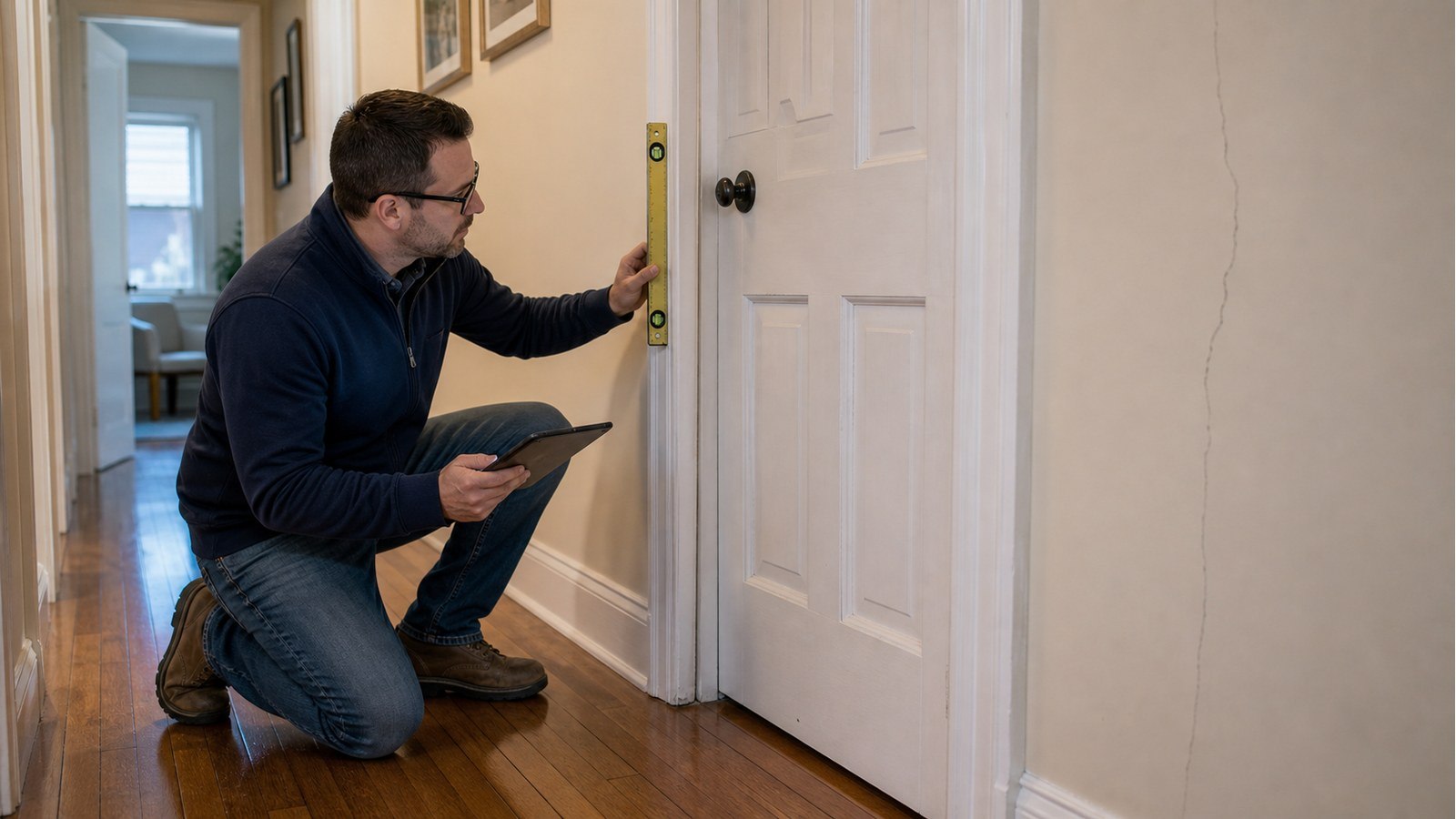
Open and close the door slowly. Note whether it rubs at the top corner, latch side, floor or along the full edge. Check whether the latch aligns and whether gaps around the door remain even. Photograph the gaps before planing or adjusting anything.
A loose hinge can let the door sag. Seasonal swelling may affect the full edge. A racked frame often changes diagonal gaps. These clues help identify the next check but should not be overinterpreted.
Use timing to narrow the possibilities
- Did the problem appear after humid weather or a plumbing leak?
- Was flooring, tile or carpet recently installed?
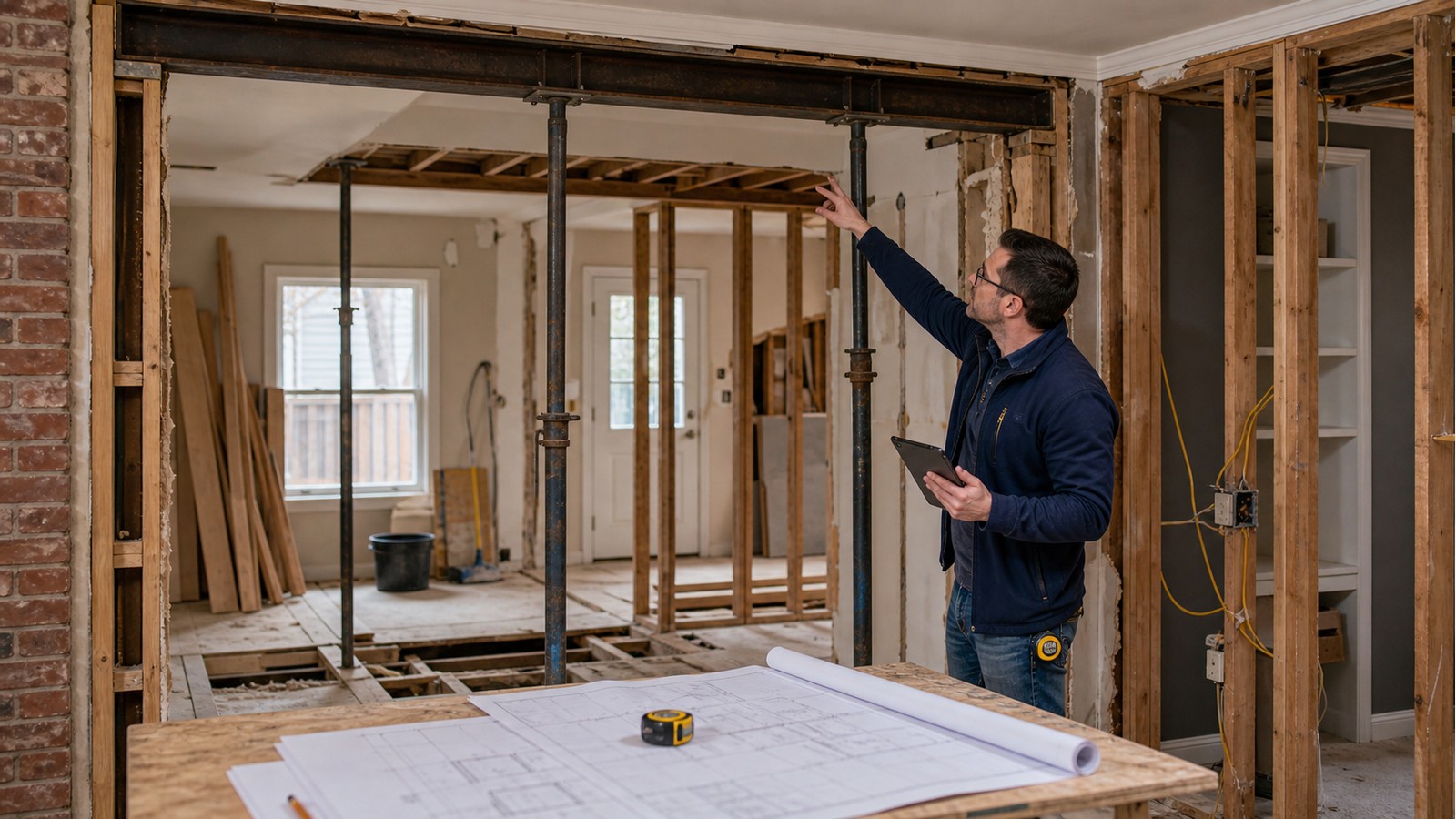
- Did a wall, beam, roof or foundation renovation occur nearby?
- Is the door new, or did the old door change suddenly?
- Do other doors or windows now behave differently?
- Are fresh cracks visible above openings or at wall corners?
A written timeline is more useful than “it has always been a bit off.” Old listing or family photos can sometimes show earlier gap patterns.
Rule out simple hardware and finish issues
Check loose hinge screws, damaged hinges, paint buildup and objects beneath the door. A carpenter can address straightforward door and frame maintenance. Avoid trimming a large amount before understanding why the gap changed; the door may no longer fit if seasonal swelling or movement reverses.
New flooring can raise the finished surface and create bottom contact without structural movement. Measure clearance and confirm what changed.
When the floor and wall deserve attention
If the frame is racked, map floor elevations and inspect supports below. A settled post, altered beam, damaged joist or foundation movement can affect openings above. Cracks at several doors may show a broader pattern.
Follow the vertical load path. A second-floor door issue may relate to framing immediately below or to supports farther down. Do not focus only on the door casing.
Interior and exterior doors reveal different constraints
An exterior door is affected by its threshold, weatherstripping, wall opening and exposure to moisture and temperature. An interior door is more likely to reflect hinge wear, finish buildup, partition movement or a changing floor. Comparing the two helps narrow the investigation without declaring a cause.
Check whether the latch misses horizontally or vertically, whether the slab rubs at one corner, and whether the frame is square. For an exterior unit, also look for water staining and failed sealant. Do not plane the door until those observations are recorded; trimming can erase a useful symptom while leaving the underlying change untouched.
Example: one seasonal door versus three changing doors
A solid-wood bathroom door swells at the edge each humid summer, with no changing gaps or cracks. Maintenance and moisture control may be the main response. In another house, three doors along the same wall begin sticking while a basement post shifts and drywall cracks form. That pattern warrants structural investigation.
The examples show why symptom count and alignment matter. They do not diagnose either property remotely.
Document before adjusting
- Photograph all four gaps and the latch alignment.
- Mark which edge contacts the frame.
- Record humidity, leak and renovation history.
- Check nearby walls, floors and exterior masonry.
- Inspect accessible framing and supports below.
- Choose carpentry adjustment, monitoring or structural review based on the pattern.
Records and professional scope
If earlier wall or beam work may be relevant, Hamilton’s property record search can help locate permits or plans. The City warns older files can be incomplete.
PEO’s older condition assessment guideline discusses defined objectives and limitations, though PEO warns some guideline content may be outdated. A focused review should state which openings and supports were inspected.
If repair changes structure
Altering joists, beams, posts or foundations can require a Hamilton permit. Check the current City requirements. Carpenter adjustment of a door is not the same scope as structural correction.
Structural design must use the current Ontario Building Code and verified construction. Do not install an adjustable post or jack a floor solely to make the latch close.
Hamilton services for sudden door changes
Structural inspections can connect door symptoms with floors and framing. If foundation cracking or movement aligns with the issue, foundation inspections is relevant. Where a repair changes supports, structural drawings defines the work.
Symptoms to compare before repair
- What Causes Cracks Above Doors And Windows In Hamilton Homes?
- Why Are My Floors Sloping In An Old Hamilton House?
- What Do Stair-Step Cracks In Brick Mean For Hamilton Homes?
Sticking-door FAQs
Should I plane the door immediately?
Tight seasonal contact may justify minor carpentry, but document sudden or large gap changes first so useful evidence is not erased.
Can humidity move the frame?
Wood components can change with moisture. Persistent racking, cracks or floor change needs a broader explanation.
Does a sticking exterior door mean foundation movement?
Not automatically. Door hardware, weather seals, frame installation and moisture can also cause it. Compare other symptoms.
Can an engineer repair the door?
An engineer assesses structural causes and designs structural repair. A carpenter performs door adjustment or replacement.
Have several openings changed? Request a quote with gap photos, timing and nearby floor or crack observations.