Are Vertical Foundation Cracks Structural Or Cosmetic In Hamilton?
Short answer: a vertical crack may be cosmetic, structural, water-related or a combination; orientation does not decide. The useful evidence is whether the wall is displaced, the crack changes, moisture or deterioration is present, and other parts of the building show related movement.
Read the crack as part of a wall, not a line
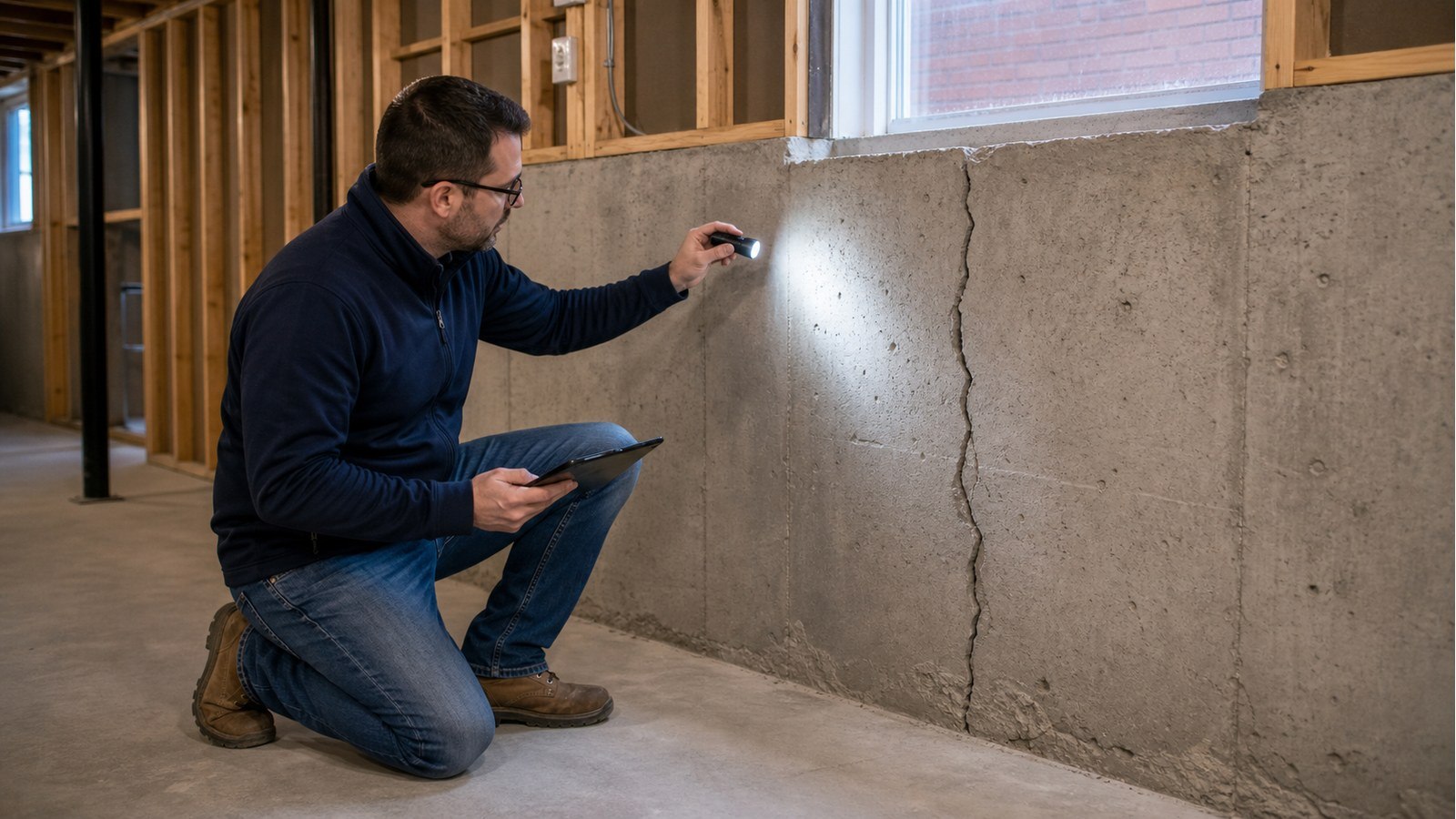
Mark the crack location on a wall sketch. Note whether it begins at a window, passes through a construction joint, continues into the slab, or appears at a foundation transition. Record both ends and any change in direction.
Check for offset across the crack, not only surface width. Two sides can remain aligned while a finish layer opens; alternatively, a modest line may accompany measurable displacement. Do not force a gauge into the crack or chip material away before review.
Four explanations that require different responses
Material shrinkage
Concrete can crack as it cures and changes volume. A stable shrinkage crack may be primarily a water-control or maintenance issue, but that conclusion depends on pattern, alignment and history.
Foundation or soil movement
Differential movement can create vertical or diagonal cracking. Floors, doors, masonry and adjoining walls may provide additional evidence. Cause cannot be assigned from one crack photo.
Water entry
Water can travel through a crack without proving loss of structural capacity. Repair still requires attention to exterior drainage and wall transitions so the response addresses more than the visible leak.
Deterioration or an earlier repair
Corrosion, freeze-thaw exposure, poor material or a reopened patch can change the significance. Identify what material is cracking and whether previous work concealed the original condition.
Create a reliable history
Use dated photographs from a consistent position with a scale beside, not over, the crack. Note weather, leakage and nearby renovation work. If monitoring is appropriate, establish fixed reference points and a review interval suited to the question.
Do not draw a pencil line across the crack and assume a broken line proves structural movement; surface marks can fail for many reasons. Monitoring should produce interpretable data and define what result triggers professional review.
Look for companion symptoms
- Doors or windows that recently changed operation.
- New floor slope or separation at trim.
- Stair-step masonry cracks outside.
- Foundation wall bowing or leaning.
- Water staining, efflorescence or material loss.
- Cracks at a nearby beam pocket, corner or addition joint.
These symptoms strengthen the case for a broader assessment but remain observations, not a diagnosis. Document when they appeared and whether they are changing.
Choose the deliverable that matches your decision
A homeowner planning maintenance may need a focused site assessment and recommendations. A property transaction may require a written report with clearly stated limits. A recurring leak may need coordinated building-envelope or drainage input. A displaced or active wall may require repair design.
Ask whether the scope includes measurements, monitoring, destructive investigation or repair drawings. A short letter should not be expected to answer questions that require opening finishes or observing change over time.
Sources and permit boundaries
Hamilton’s property record search may reveal earlier foundation permits or drawings. The City cautions that records may not exist and do not necessarily establish current conditions.
If a repair changes the structure, check Hamilton’s current building permit requirements. Repair design must use the current Ontario Building Code and site evidence. A permit does not determine the cause of the crack.
Example decision: dry stable line or changing wet crack?
One vertical crack has appeared unchanged in old photos, remains aligned and dry, and has no companion symptoms. Another shows fresh leakage, reopened patching and movement in exterior masonry. Both deserve accurate documentation, but the second presents a different investigation priority.
This comparison does not classify either crack remotely. It shows why history and related evidence matter more than applying “vertical equals cosmetic.”
When the review should extend beyond one wall
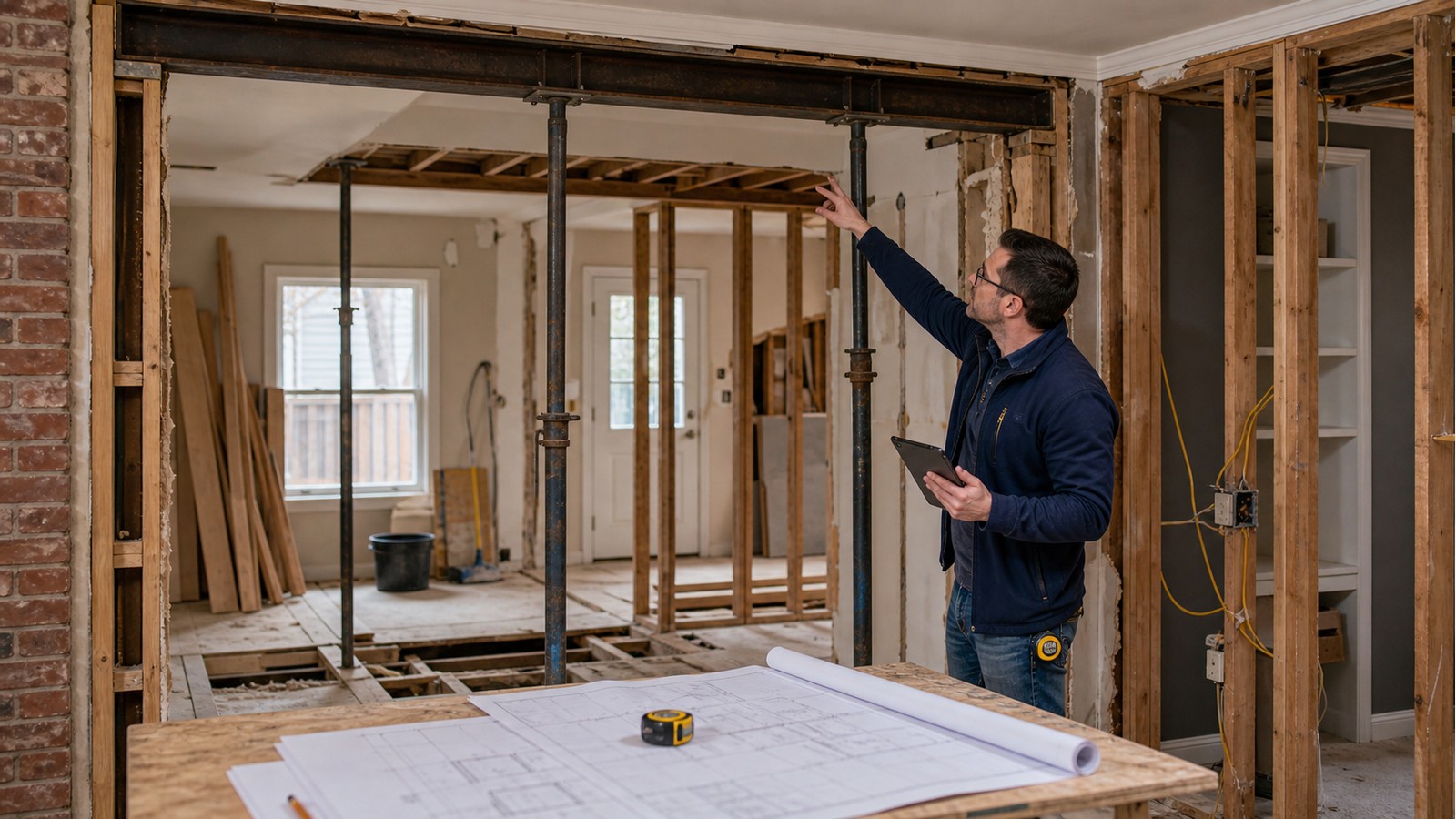
Broaden the assessment if the crack aligns with floor movement, exterior masonry separation, sticking openings or changes at an addition. Those observations may indicate a building-wide load-path or foundation question rather than an isolated surface defect. The expanded scope should still identify which areas were inspected and avoid implying that inaccessible parts of the house were verified.
Hamilton services for vertical cracking
Foundation inspections addresses foundation cracks and movement. If symptoms extend into floors, roofs or framing, structural inspections may provide the broader scope. Where a permanent repair is supported by findings, structural drawings can communicate the repair.
Continue the crack investigation
- Are Horizontal Foundation Cracks Serious In Hamilton Homes?
- What Do Stair-Step Cracks In Brick Mean For Hamilton Homes?
- How Do Structural Engineers Monitor Foundation Movement In Hamilton?
Vertical crack FAQs
Is every hairline vertical crack harmless?
No. Width alone cannot establish cause or significance. Alignment, change, wall construction and companion symptoms matter.
Can I seal the crack from inside?
A sealing method may address certain leaks, but the source and structural significance should be understood first. Interior sealing may not address exterior water paths.
Does a dry crack need attention?
Dryness answers only the current water observation. A changing or displaced dry crack can still warrant structural assessment.
Will a report say the whole house is structurally sound?
A focused crack report should state its scope and limits. It should not imply an exhaustive assessment of areas that were not inspected.
Need a vertical crack assessed? Request a quote with dated photos, wall location and known history.