Can A Rusted Steel Lintel Become A Structural Problem In Hamilton?
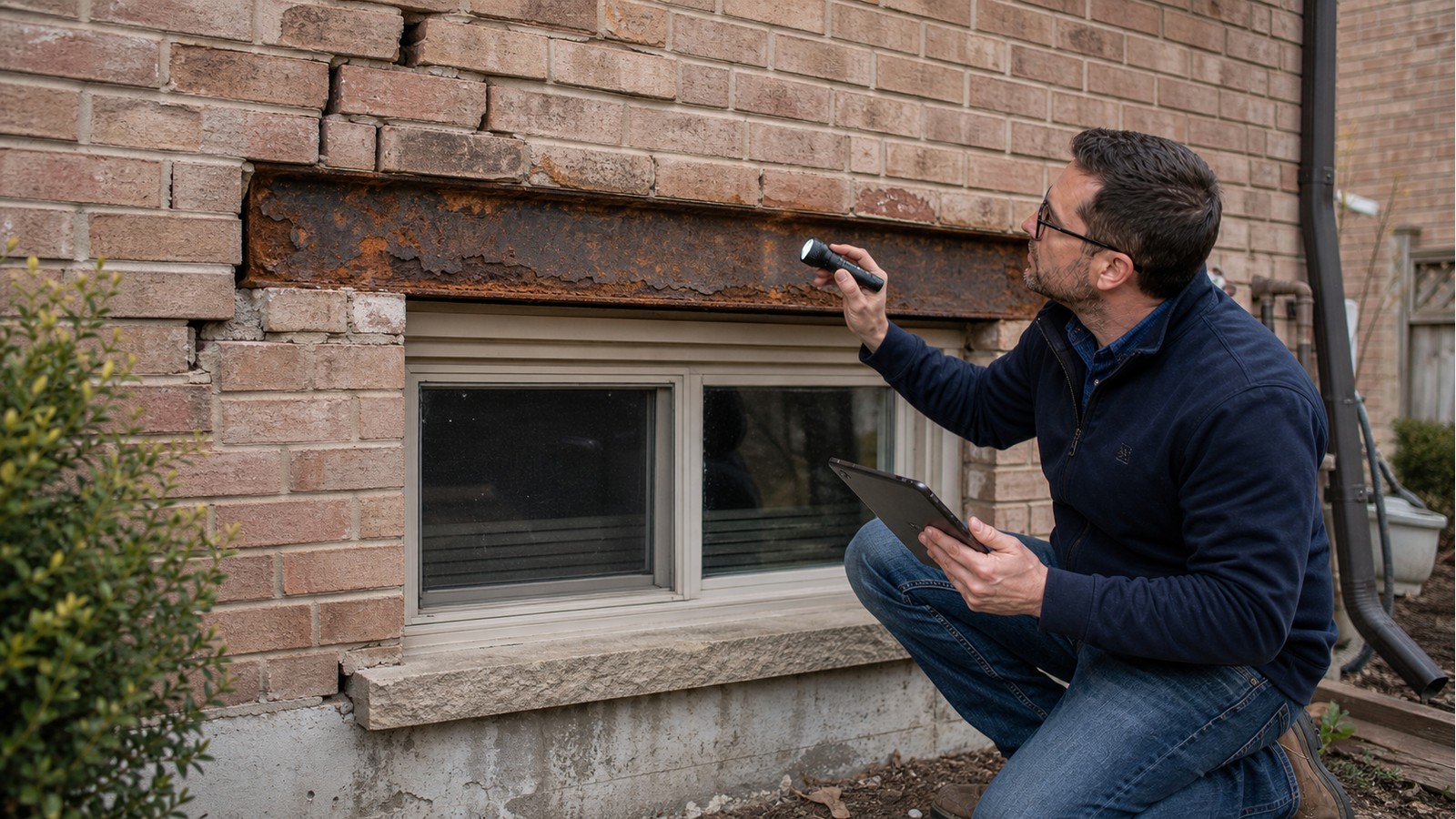
Yes. A rusted steel lintel can become a structural problem by losing steel section, reducing reliable bearing or expanding enough to crack and displace the masonry it supports. The amount of visible rust is not a dependable measure of remaining capacity because critical corrosion may be concealed inside the wall or concentrated near the ends.
Not every orange stain means imminent failure. Assessment considers the lintel’s function, span, wall assembly, deformation, bearing, surrounding crack pattern and moisture source. Loose masonry or rapid change deserves faster action than stable surface staining with no displacement.
Corrosion harms masonry before steel disappears
When steel corrodes, the corrosion products expand. A lintel trapped beneath brick can lift courses, open horizontal mortar joints and create step cracks near its ends. Brick faces may spall, sealant joints may separate, and the opening below may become distorted. These effects can occur before the exposed edge appears severely thinned.
Section loss is the other concern. Rust can reduce the effective steel that resists bending and shear. Scaling at the exposed toe does not reveal the full condition of the leg embedded in the wall, so sanding one visible area is not a complete assessment.
Read the crack pattern around the whole opening
Photograph the lintel, courses above it, both ends, the jambs and the wall beyond. Horizontal cracking directly over steel, stepped cracking from corners, lifted brick, rotation or separated bearing can help locate movement. Compare window or door operation and interior finishes, while recognizing that those symptoms can have other causes.
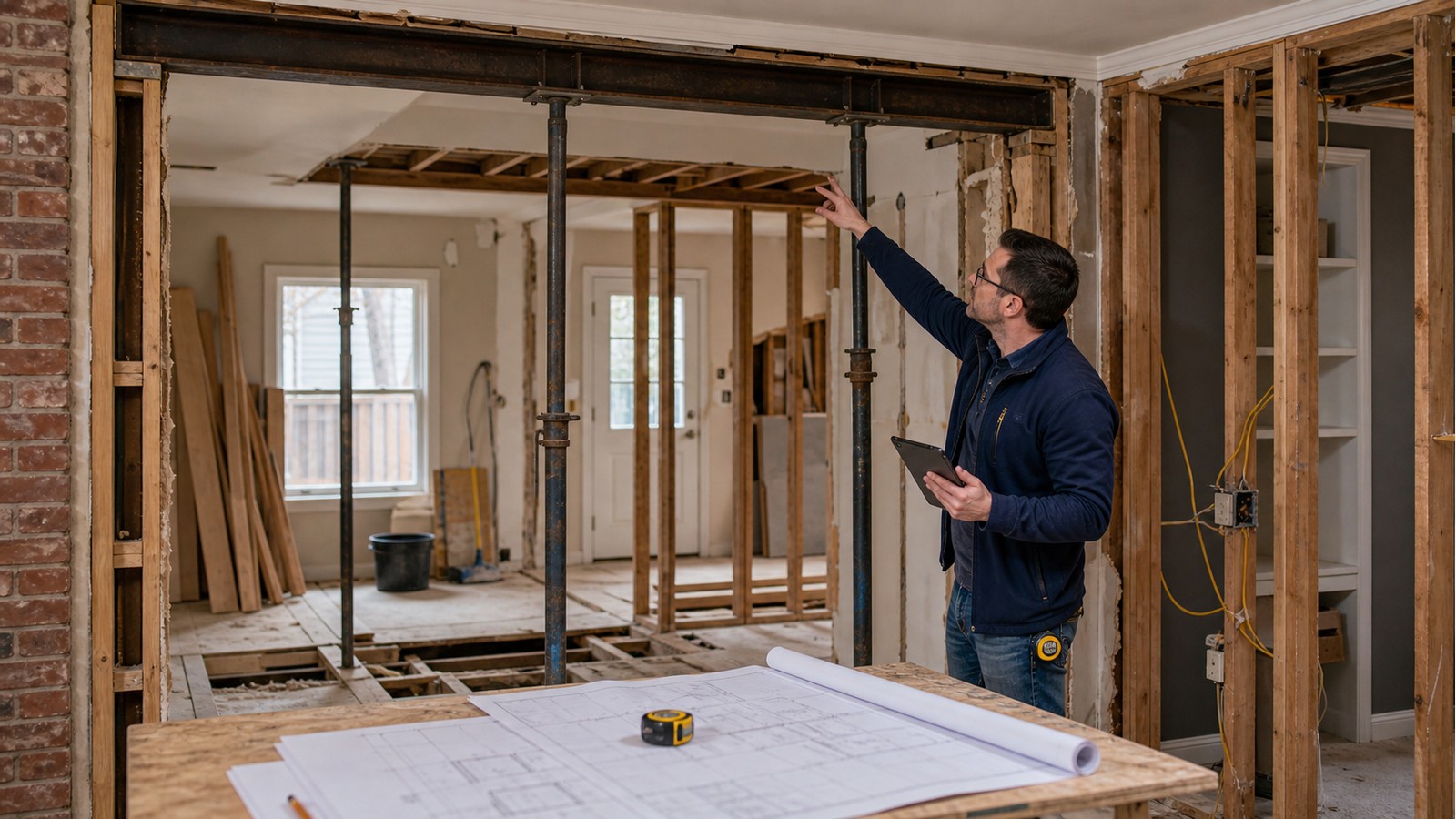
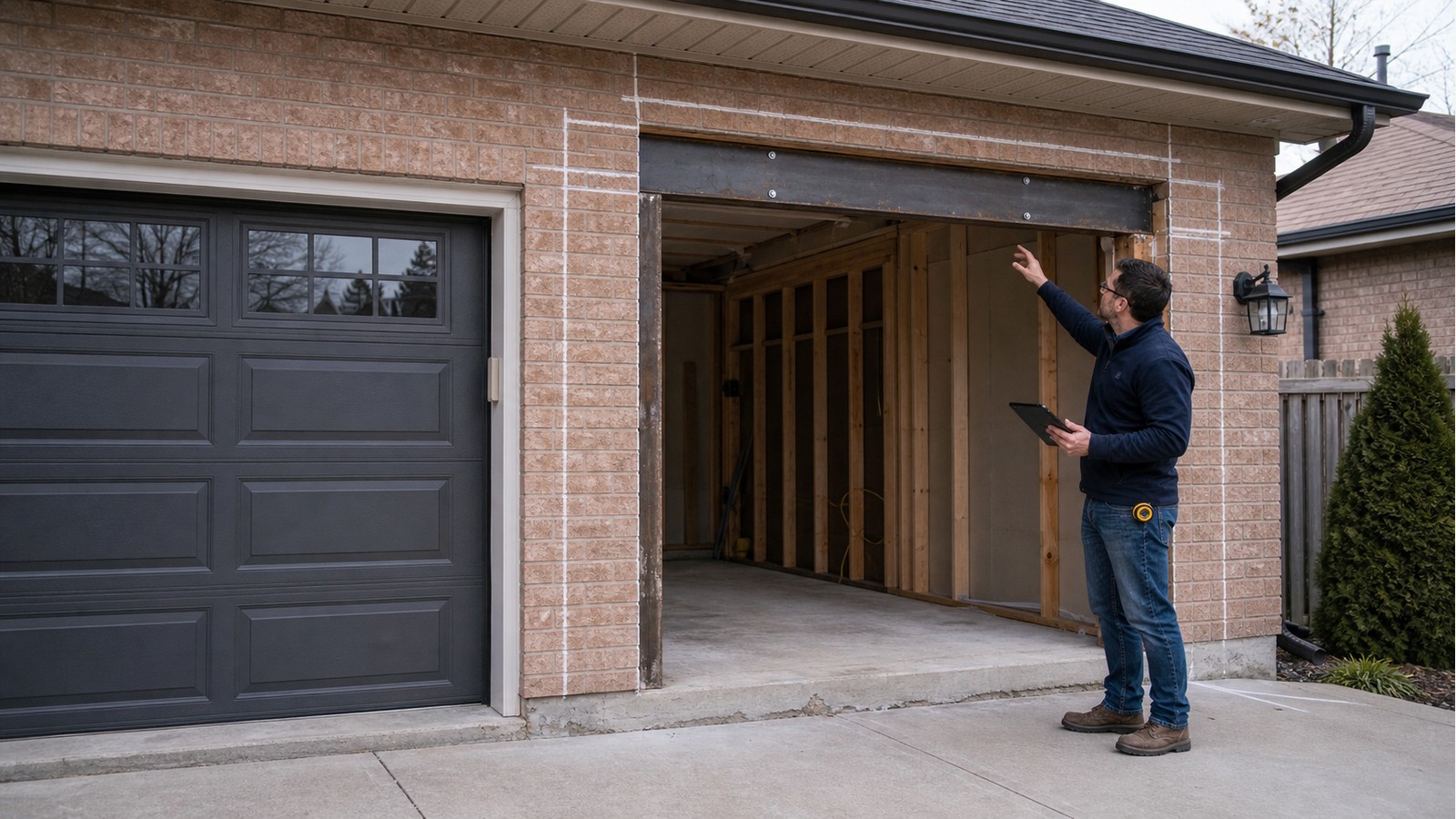
A Hamilton structural inspection can document accessible distress. If replacement is required, structural repair drawings may define the member, bearing and sequence, while structural renovation services can address changes to the opening or backing structure.
Moisture control determines whether repair lasts
Corrosion needs moisture. Water may enter at failed sealant, missing or ineffective flashing, blocked drainage, roof interfaces or cracks above. The exact route should be investigated rather than assuming paint on the exposed edge will solve it. Coatings cannot protect hidden steel if water continues to collect.
Structural and envelope scopes must connect. The engineer may specify steel and structural support, while another designer or qualified contractor details flashing, end dams, weeps and cladding transitions. Responsibility for each component should be written down.
Signs that warrant prompt restriction and review
- Loose, displaced or falling brick above a door, window or public path.
- A visibly sagging, twisted or separated lintel.
- Fresh cracking, new debris or rapid change after weather or impact.
- Severe flaking steel, holes, lost bearing or masonry crushing at an end.
- Bulging wall areas or separation between veneer and the building.
- Temporary supports, earlier patches or removed brick with no records.
When falling material is possible, keep people away and arrange urgent professional direction. An online description cannot determine whether it is safe to walk below the area.
Why patching mortar is often incomplete
New mortar can close a crack but does not reverse steel expansion, restore lost section or improve bearing. The crack may return as corrosion continues. Grinding and painting the exposed edge can be similarly incomplete when the embedded steel is affected.
A durable plan may involve controlled masonry removal, temporary support, lintel replacement or reinforcement, restoration of bearing, and revised water management. The exact choice depends on verified conditions; this article is not a repair detail.
Document conditions before cleaning or demolition
Take dated overview and close photographs with a scale. Record opening dimensions, exposed steel geometry, deflection, cracks, rust staining and leak history. Locate occupied entrances or neighbouring property below. Preserve prior repair invoices and drawings if available.
If masonry must be opened, agree on a safe sequence and the observations needed while concealed surfaces are accessible. Do not rush to rebuild before hidden corrosion, ties and backing construction are documented. Unexpected conditions may require the repair drawing to change.
Permit and code decisions belong to current sources
Hamilton provides current residential permit information for local projects. Ontario’s official Building Code portal is the provincial source for code resources. The City decides whether a proposed lintel repair requires a permit and what drawings must accompany it.
A permit decision should not delay management of an immediate falling-object hazard. Temporary stabilization, permanent design and municipal approval may proceed as coordinated but distinct steps.
What the assessment does not guarantee
A review is limited to identified openings and accessible construction. Similar-looking lintels elsewhere may have different exposure, bearing or section loss. Unless the scope covers the full façade, conclusions should not be extended to every opening.
Remaining life also cannot be promised from a single photograph. Where steel remains in service, recommendations may include further exposure, measurements, repairs or observation based on the consequences and uncertainty.
Related Hamilton guides
Use the companion guides on lintel replacement engineering, masonry crack assessment, and brick-veneer repair drawings.
Frequently asked questions
Can I judge lintel condition by rust colour?
No. Colour does not quantify remaining section, hidden corrosion, bearing or deformation. Context and, where necessary, physical exposure and measurements are required.
Will painting the lintel stop the problem?
Coating properly prepared accessible steel can be one component, but it will not restore lost capacity or stop water reaching concealed surfaces. Moisture entry and drainage must be addressed.
Can rust cause cracks several brick courses higher?
It can contribute to displaced and stepped cracking, but crack location alone does not prove corrosion as the cause. Other support and movement mechanisms should be considered.
Should the window be replaced at the same time?
Only if condition or coordination justifies it. A window may need temporary removal for access, but lintel support and window performance are separate decisions that should be planned together.
Assess the steel before covering the symptom
Hamilton Structural Engineers can help determine whether visible lintel distress needs investigation or a designed repair. Request a structural engineering quote with overview photos, close-ups, dimensions and change history.