Can Water Leaks Cause Structural Foundation Damage In Hamilton?
Short answer: water can contribute to foundation problems by deteriorating materials, affecting soil conditions or increasing pressure, but a leak alone does not prove structural damage. Equally, a dry wall is not proof of structural adequacy. Investigate the water path and the structure as related but distinct questions.
Trace where the water appears—and where it may start
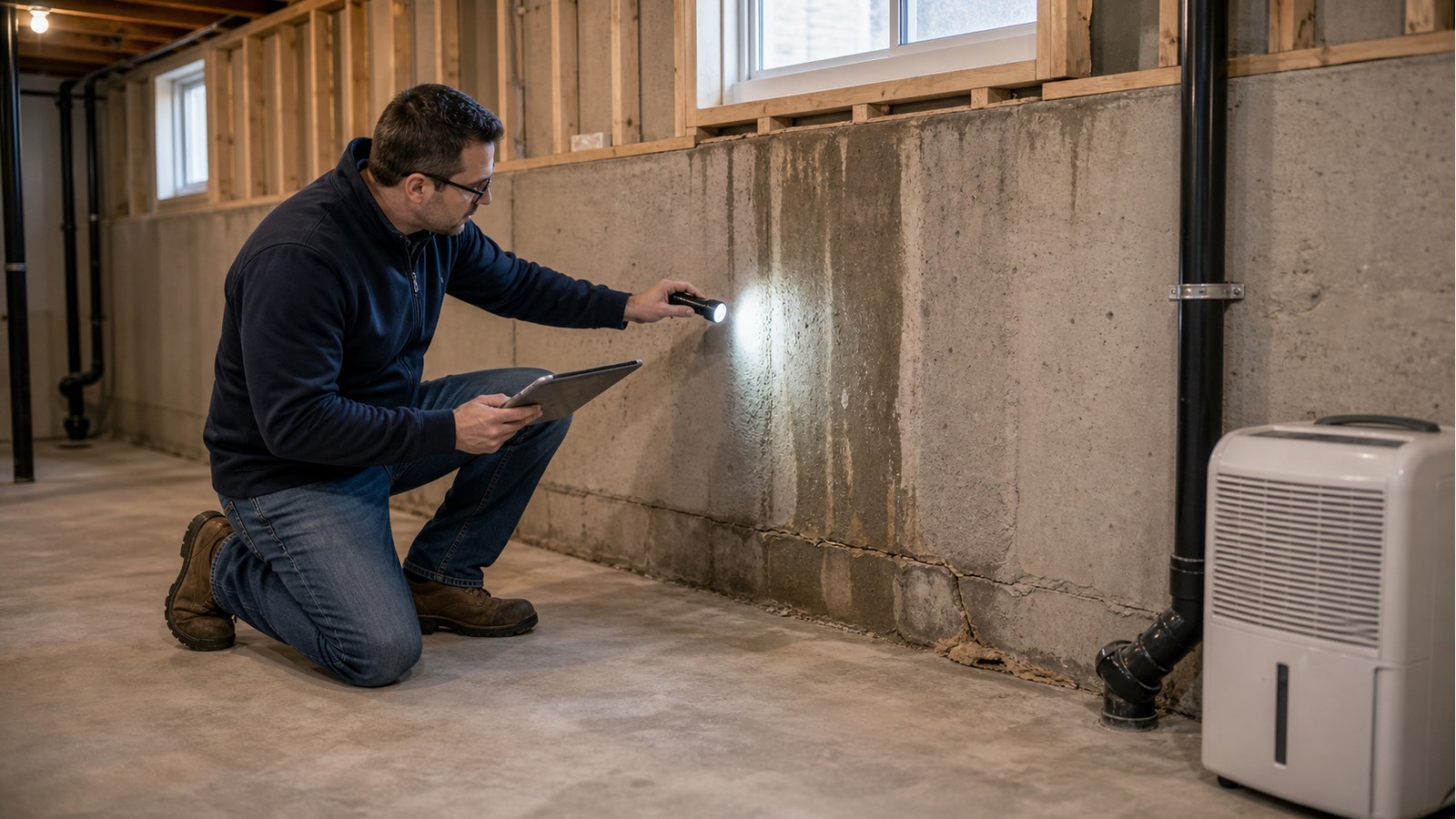
Document whether water enters through a crack, joint, penetration, window, wall-floor junction or over the top of the foundation. Note rain, snowmelt, plumbing use and seasonal timing. Water can travel before appearing indoors, so the visible stain may not mark the source.
Outside, inspect safely accessible grades, downspouts, window wells, hard surfaces and drainage features. Do not excavate beside a footing or dismantle a retaining feature without a plan.
Three pathways from moisture to structural concern
Material deterioration
Repeated wetting, salts, freeze-thaw exposure or corrosion can weaken concrete, masonry, mortar or embedded metal. Record spalling, rust staining, softened mortar and material loss rather than describing every wet surface as structural failure.
Changing ground conditions
Water can influence soil volume, erosion, frost behaviour and lateral pressure. Determining the effect may require geotechnical or drainage expertise. A homeowner observation cannot establish bearing capacity or groundwater conditions.
Concealed damage
Finished walls can trap moisture and hide cracks, rot at framed walkout walls, or deterioration at connections. Targeted access may be warranted where smell, staining or repeated leakage persists.
Evidence that broadens the review
- Cracks that are displaced or changing.
- Wall bowing, leaning or separation at corners.
- Floor movement or doors changing operation nearby.
- Material loss, exposed reinforcement or loose masonry.
- Water carrying soil or leaving voids.
- Repeated leaks after surface repairs.
If electrical hazards, sewage, unstable material or severe active flooding are present, prioritize immediate safety and qualified emergency response.
Also record whether storage or finished walls prevent the same location from being observed consistently over time.
Why waterproofing should follow a diagnosis
An interior coating may manage a surface symptom while exterior water continues to reach the wall. Exterior excavation may address a water path but introduce temporary foundation risk. Crack injection may stop certain leaks without correcting movement. The method should match the verified mechanism and structural condition.
Ask the waterproofing proposal to state what it does and does not address. A water-control warranty is not the same as a structural assessment. Likewise, an engineer’s foundation report may not design a complete drainage system unless included.
Build a useful moisture timeline
Keep dated photos, rainfall or thaw context, locations and duration. Note changes to eavestroughs, grading, landscaping or adjacent construction. If a crack is monitored, record leakage and geometry separately so one does not become a proxy for the other.
Available property records may identify previous foundation or drainage permits. Hamilton’s record-search service explains owner requests while warning that older records may not be available.
Separate the repair decisions
- Control immediate water safely. Protect occupants and equipment without erasing evidence unnecessarily.
- Identify the likely water path. Inspect roof, grade, openings, penetrations and drainage.
- Assess structural condition. Document cracks, displacement, deterioration and support.
- Coordinate permanent work. Ensure waterproofing, drainage and structural repair details do not conflict.
- Verify before concealment. Keep critical work accessible for required inspection or review.
Permit and regulated-area questions
Hamilton’s permit page lists foundation waterproofing, dampproofing, weeping-tile replacement and structural repairs among work that can require permits. Check the current City guidance for the exact scope.
Sites near regulated natural features may need conservation review. Consult the applicable authority; the HCA regulation page does not replace municipal permits or prove a site is outside another authority’s jurisdiction.
Structural work must follow the current Ontario Building Code. Do not infer a repair specification from a moisture symptom alone.
Example: leak at a vertical crack after heavy rain
The water may travel through the crack, but the investigation should also check grading, downspouts and wall penetrations. If the crack remains aligned and stable, the structural response may differ from a displaced or changing crack. Both water and movement evidence guide the permanent solution.
Hamilton services for wet foundations
Foundation inspections assesses cracks, movement and deterioration. Broader symptoms may fit structural inspections. If findings require strengthening or rebuilding, structural foundations covers the engineering design, coordinated with water-control specialists as needed.
Further reading on cracks and water
- Are Vertical Foundation Cracks Structural Or Cosmetic In Hamilton?
- Why Is My Basement Wall Bowing Inward In Hamilton?
- When Does A Foundation Crack Need Repair In Hamilton?
Foundation leak FAQs
Does efflorescence mean the wall is failing?
It indicates moisture movement and salt deposits, not a stand-alone structural diagnosis. Assess material condition and the water source.
Can a dehumidifier solve foundation water entry?
It may reduce indoor humidity but does not repair an exterior leak, drainage problem or structural crack.
Should I seal from inside or outside?
The appropriate approach depends on water path, access, wall condition and project constraints. Compare complete, evidence-based proposals.
Can water damage the footing under the wall?
Ground and drainage conditions can affect foundations, but the effect cannot be inferred from a damp spot. Appropriate site and soil investigation may be necessary.
Dealing with recurring foundation water? Request a quote with dated leak, crack and exterior drainage photos.